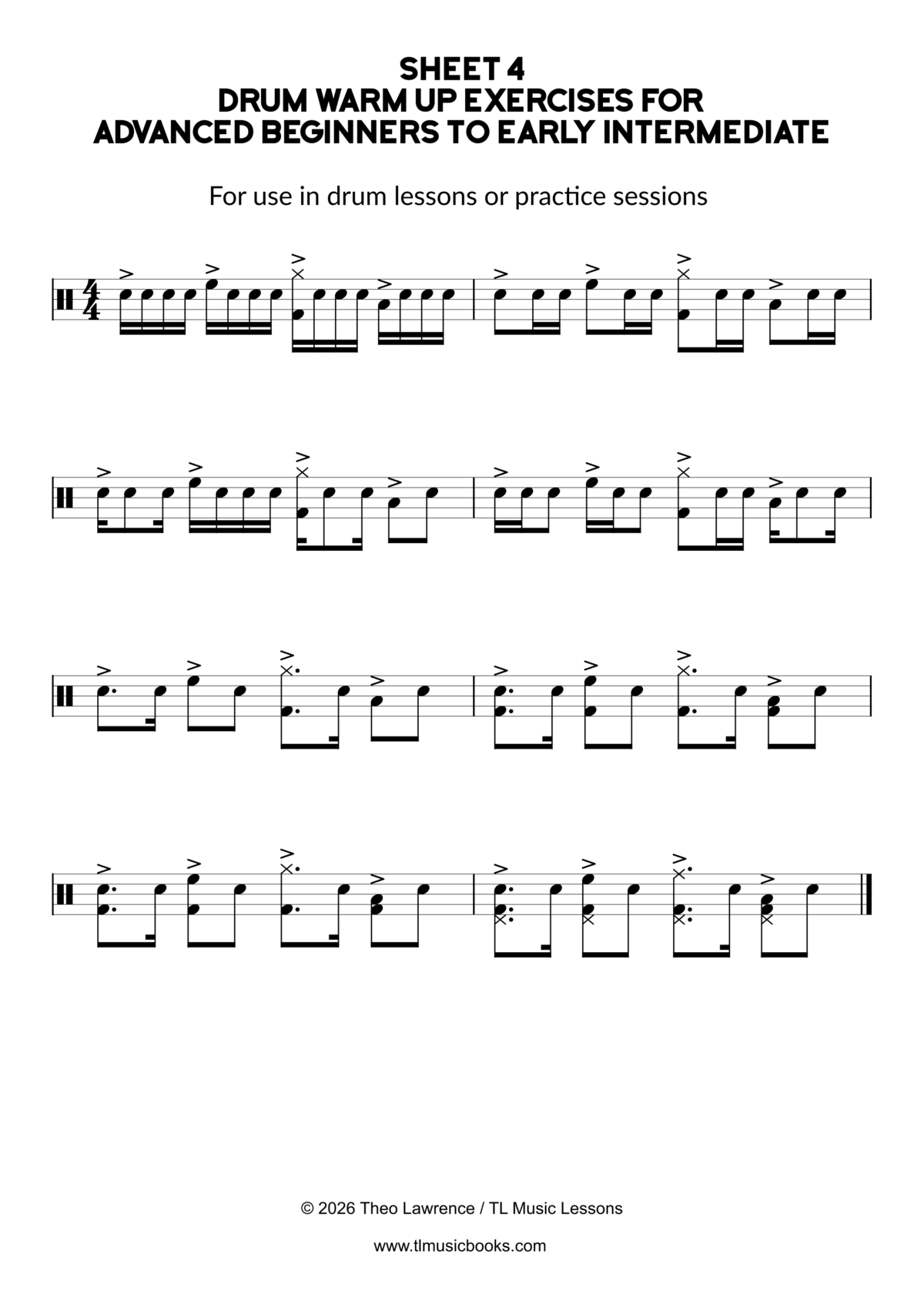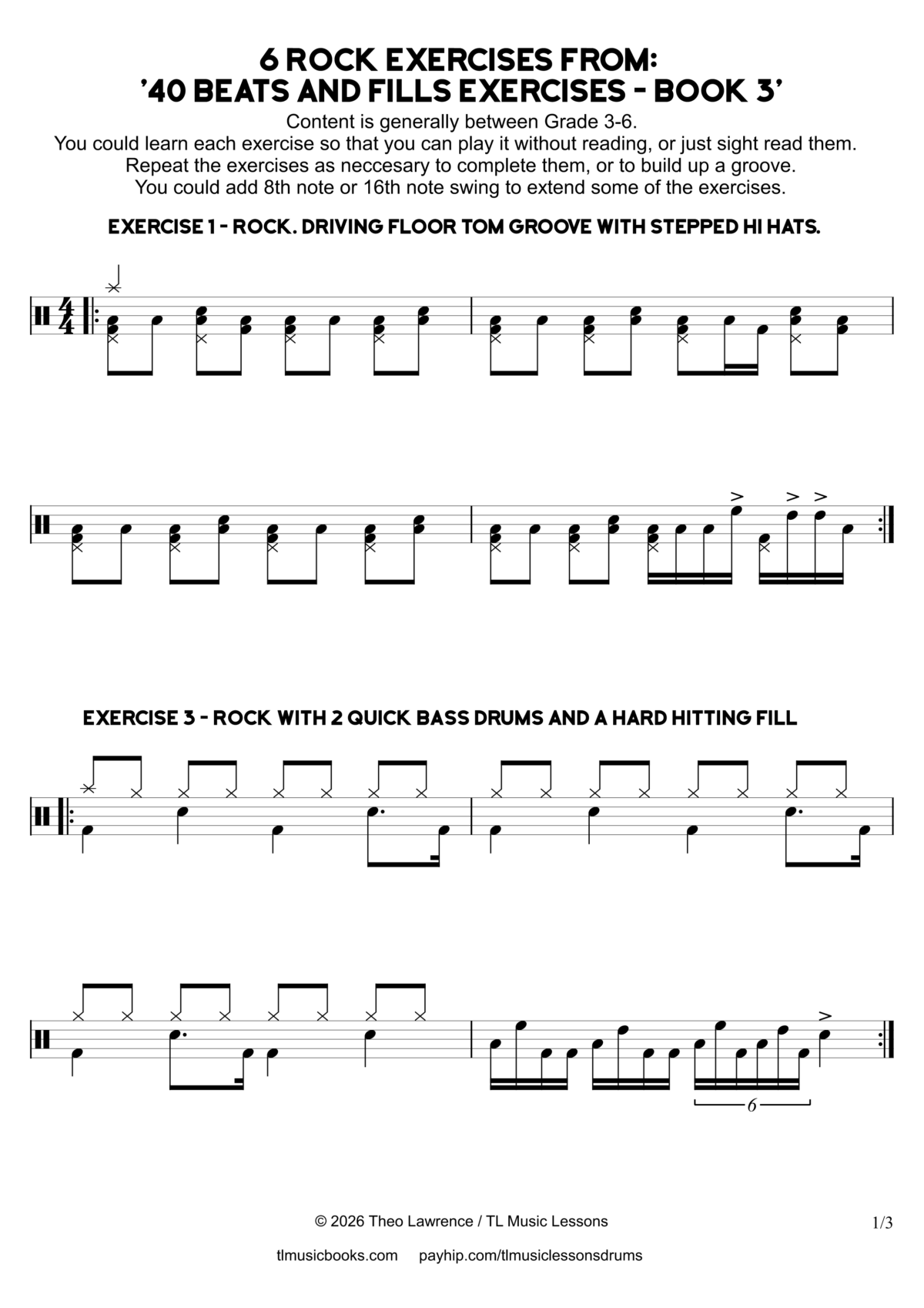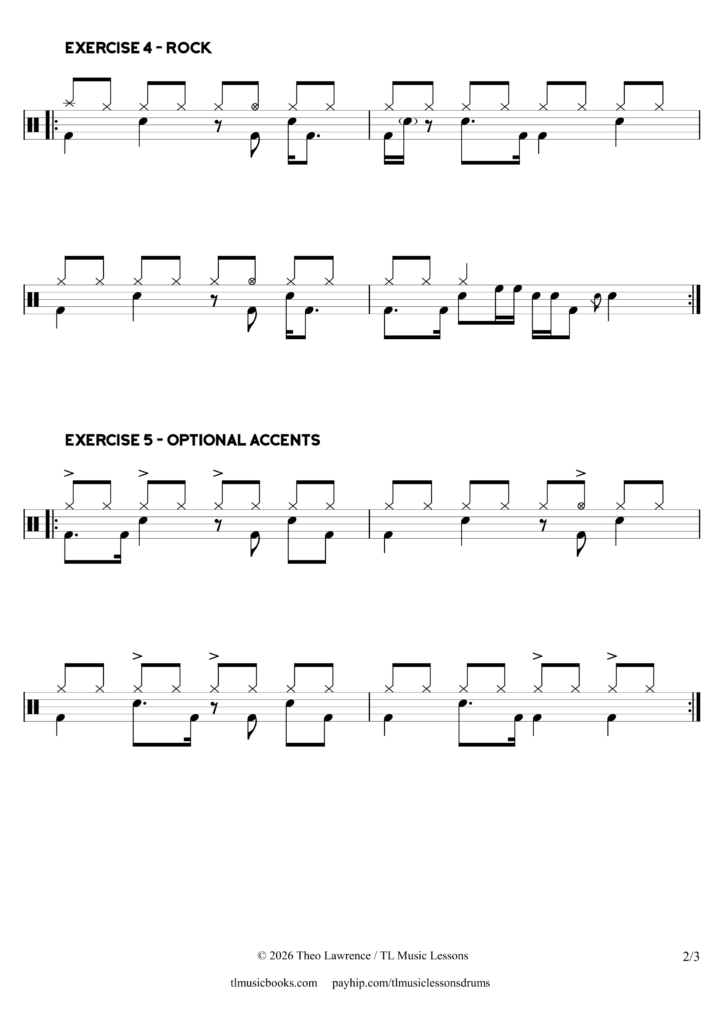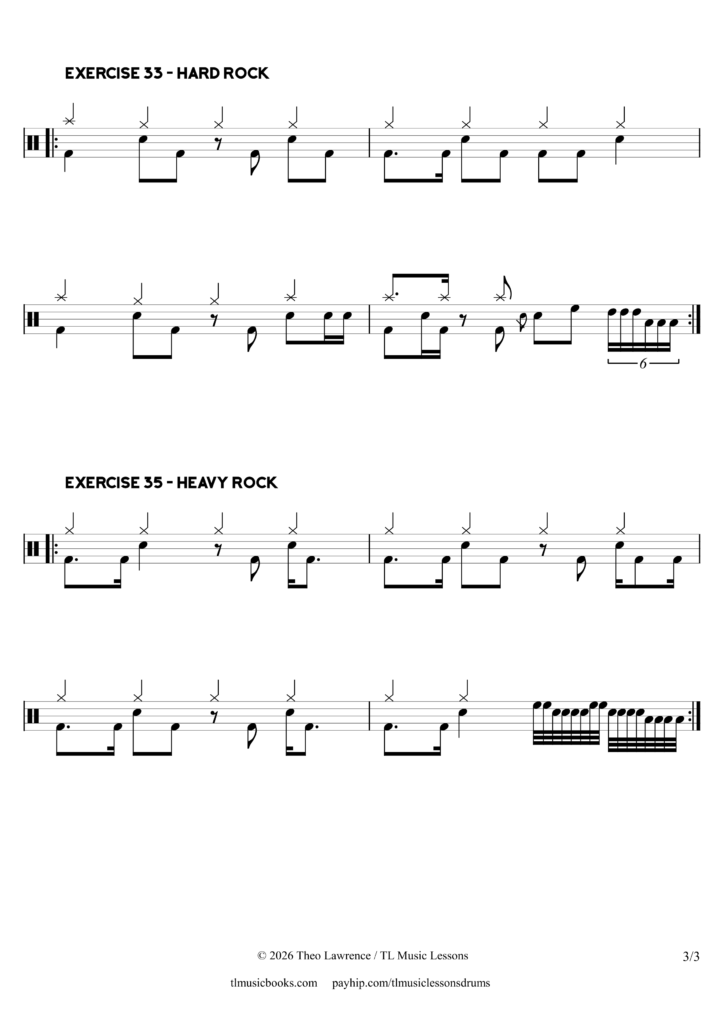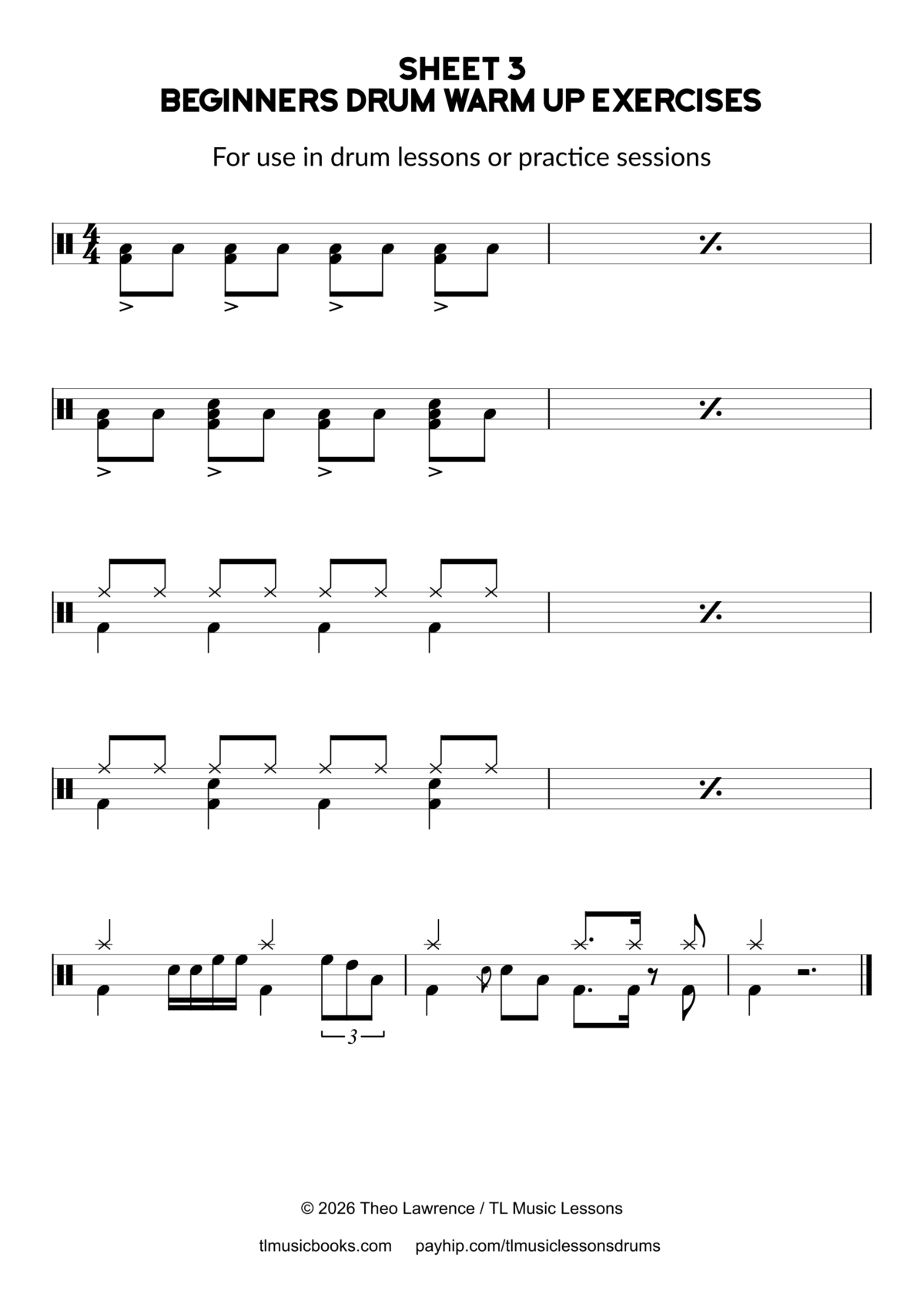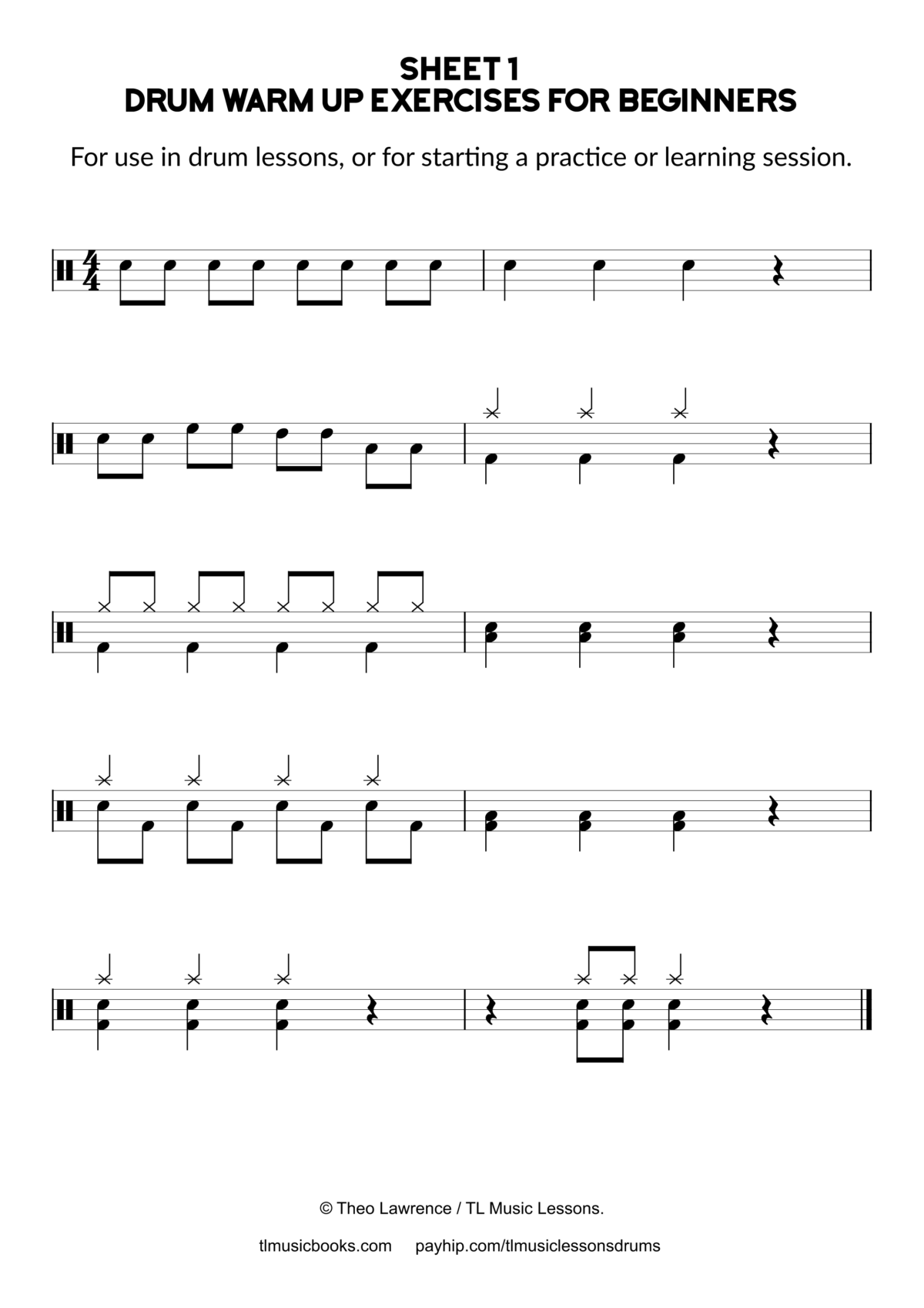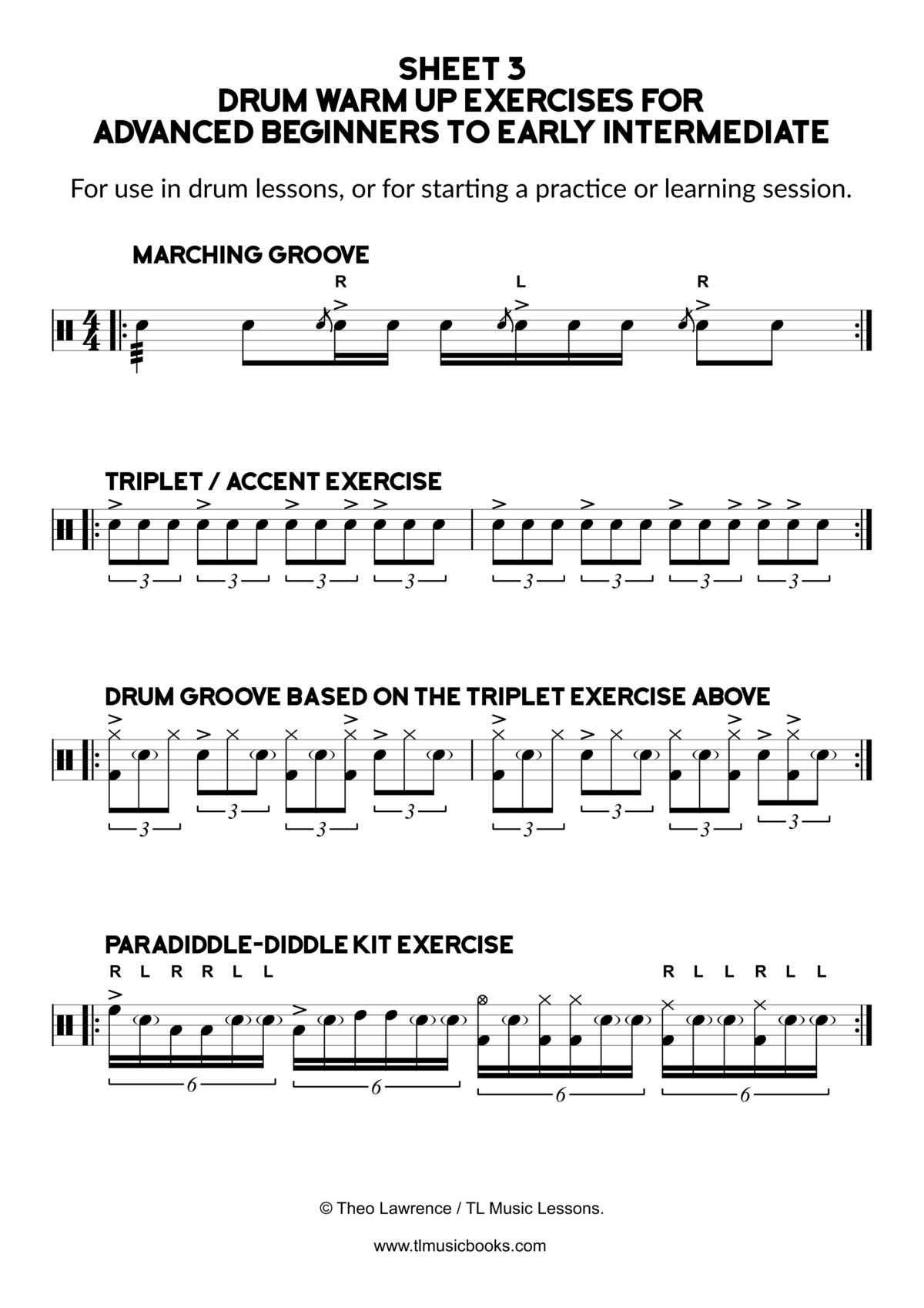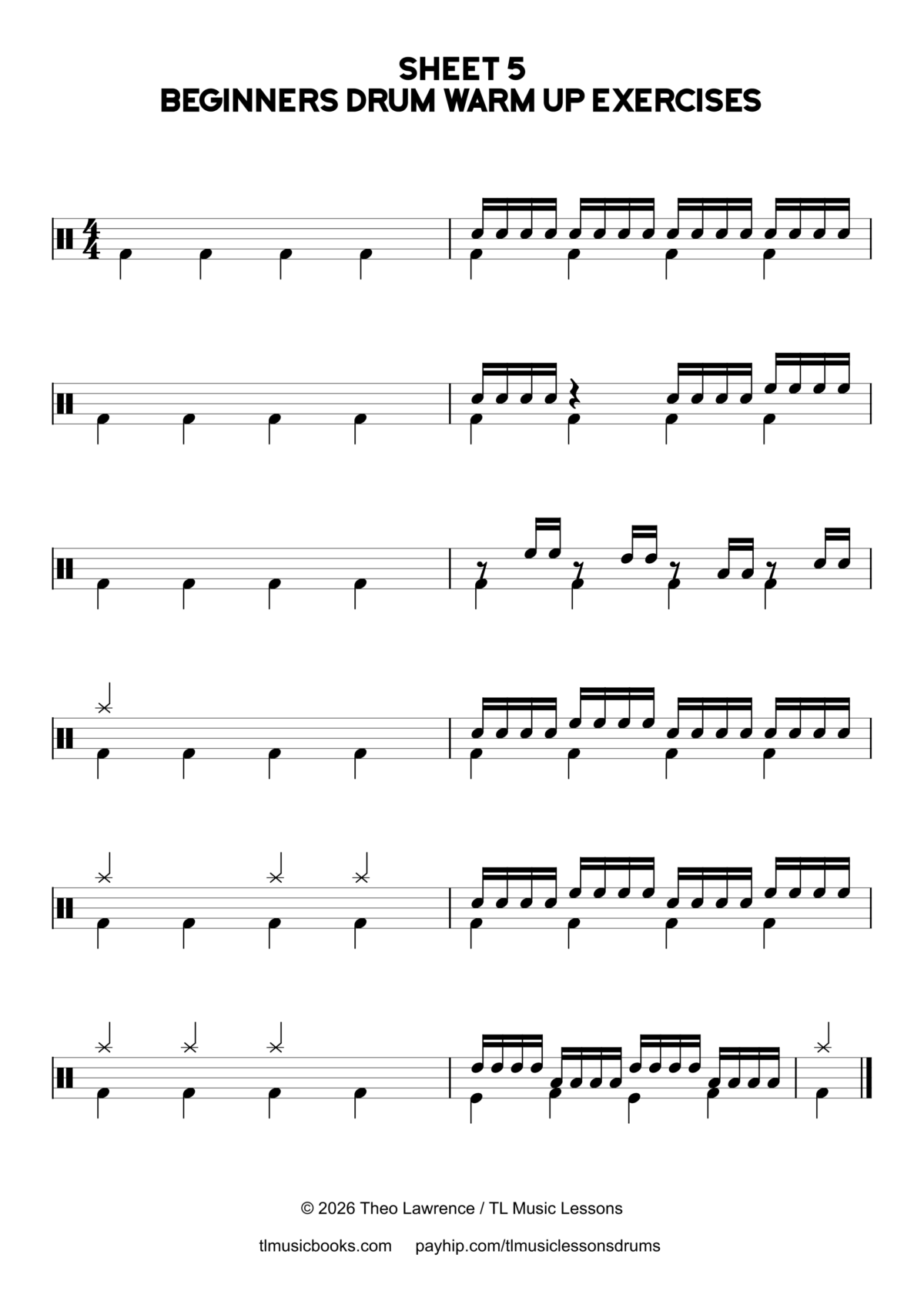
This collection of 50 beginners drum beats features in my ebook Beginners Drum Book 2023. I am planning to update this book at some point so the 50 beats may change or become more than 50, but if I do create a newer version, the 2023 version will still be included as a pdf ebook. We start off fairly easy and by beat 21 the beats do get quite hard, learning Jazz beats with 4 way co-ordination. This selection of 50 beats can be learned as one topic, or it can be something to dip in and out of. Here are all of the sheets with all 50 beats, but if you would like the printable pdf, then you will need to purchase that here.
An interesting style of drumming that has become popular recently is live breakbeats or human drum ānā bass music. Bands like Nerve and Shobaleader One have been on the cusp of the movement and players like Johnny Rabb and Jojo Mayer have been using their considerable chops and applying them to electronic sounding, yet still very acoustic, beats for decades. Playing in this style can be a lot of fun because it is improvisational like jazz, technical and chops heavy like metal or prog, and very flashy with a prominent and featured drum part.
To get into this style you can start in a couple of places. Drum and Bass beats are traditionally either created by sampling existing music off of a turntable, or by programming rhythms into a drum machine. In this selection of exercises we will focus on recreating the drum machine sound, rather than the sampled sound. Programmed beats are sometimes called steps because of the 16 steps (16th notes on which you can apply sounds) of an old loop sequencer drum machine. These exercises all feature essentially the same 3 core steps. These are classic rhythms that permeate much of electronic music and can be embellished in many ways to come up with more interesting grooves. These first 3 patterns are demonstrated here:
The hi-hat or ride cymbal can be used with any of these steps. We can also change the value of the cymbal pattern from 8ths to quarters to change the feel. Try to work these basic beats up to at least 160bpm if not higher for an authentic sound.
For slower tempos, more cymbals keep up the energy level. 16ths would be the next logical step.
For a layered texture, add in hi hat with your foot. Drum machines can play lots of notes simultaneously, so layering in another cymbal pattern helps keep up the illusion of a programmed beat.
Keep in mind that drum machines have no soul. Counterintuitively, the less human feeling or groove you can impart to these patterns the better they will sound in a drum and bass context. Try to play all the cymbal notes at the same dynamic level and keep everything steadily right down the center of the beat. Once you master these patterns, you can begin to add ghost notes, hi hat openings, fills, and other elements to make things more interesting. More advanced step patterns, classic breaks, break manipulation strategies, and extended techniques, can be found in Live Drum & Bass ā Breakbeats and Electronic Music for Real Drummers available from Hudson Music and Amazon.com
Contains information related to marketing campaigns of the user. These are shared with Google AdWords / Google Ads when the Google Ads and Google Analytics accounts are linked together.
90 days
__utma
ID used to identify users and sessions
2 years after last activity
__utmt
Used to monitor number of Google Analytics server requests
10 minutes
__utmb
Used to distinguish new sessions and visits. This cookie is set when the GA.js javascript library is loaded and there is no existing __utmb cookie. The cookie is updated every time data is sent to the Google Analytics server.
30 minutes after last activity
__utmc
Used only with old Urchin versions of Google Analytics and not with GA.js. Was used to distinguish between new sessions and visits at the end of a session.
End of session (browser)
__utmz
Contains information about the traffic source or campaign that directed user to the website. The cookie is set when the GA.js javascript is loaded and updated when data is sent to the Google Anaytics server
6 months after last activity
__utmv
Contains custom information set by the web developer via the _setCustomVar method in Google Analytics. This cookie is updated every time new data is sent to the Google Analytics server.
2 years after last activity
__utmx
Used to determine whether a user is included in an A / B or Multivariate test.
18 months
_ga
ID used to identify users
2 years
_gali
Used by Google Analytics to determine which links on a page are being clicked
30 seconds
_ga_
ID used to identify users
2 years
_gid
ID used to identify users for 24 hours after last activity
24 hours
_gat
Used to monitor number of Google Analytics server requests when using Google Tag Manager