Drum Warm Up Exercises for Advanced Beginners – Sheet 1

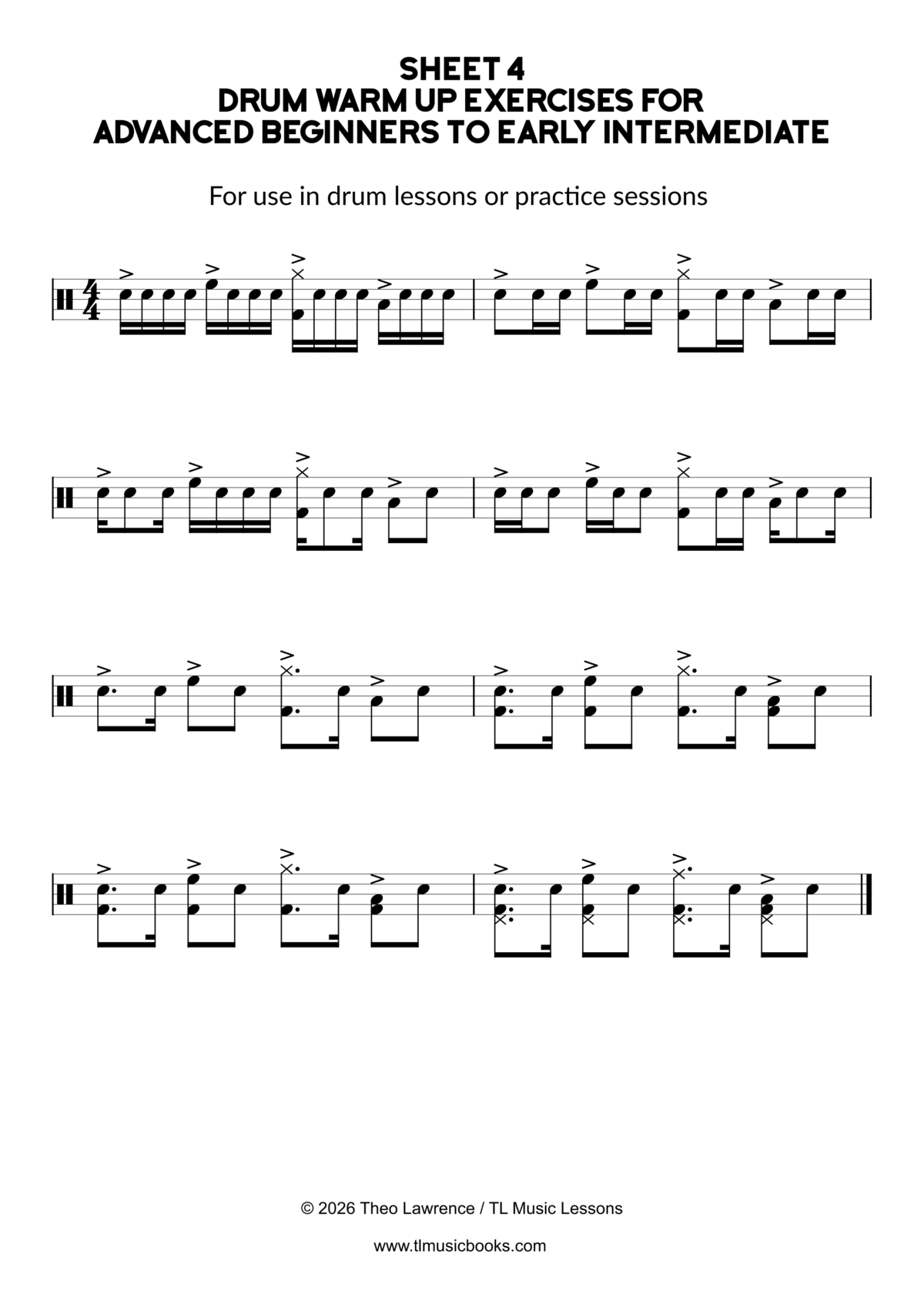
Advanced beginners drum warm up exercises for use in drum lessons, or for starting a practice or learning sessions.

Advanced beginners drum warm up exercises for use in drum lessons, or for starting a practice or learning sessions.

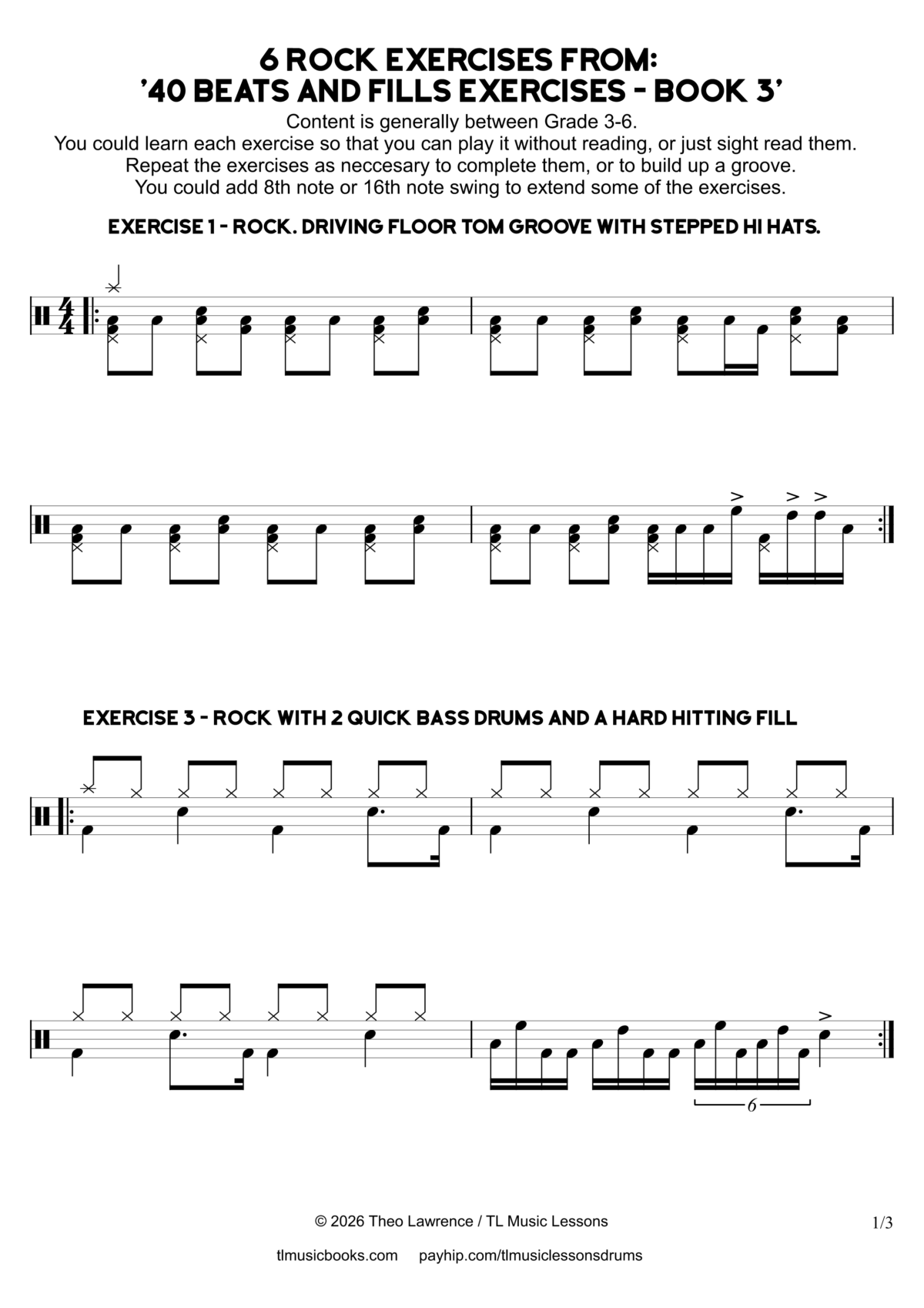
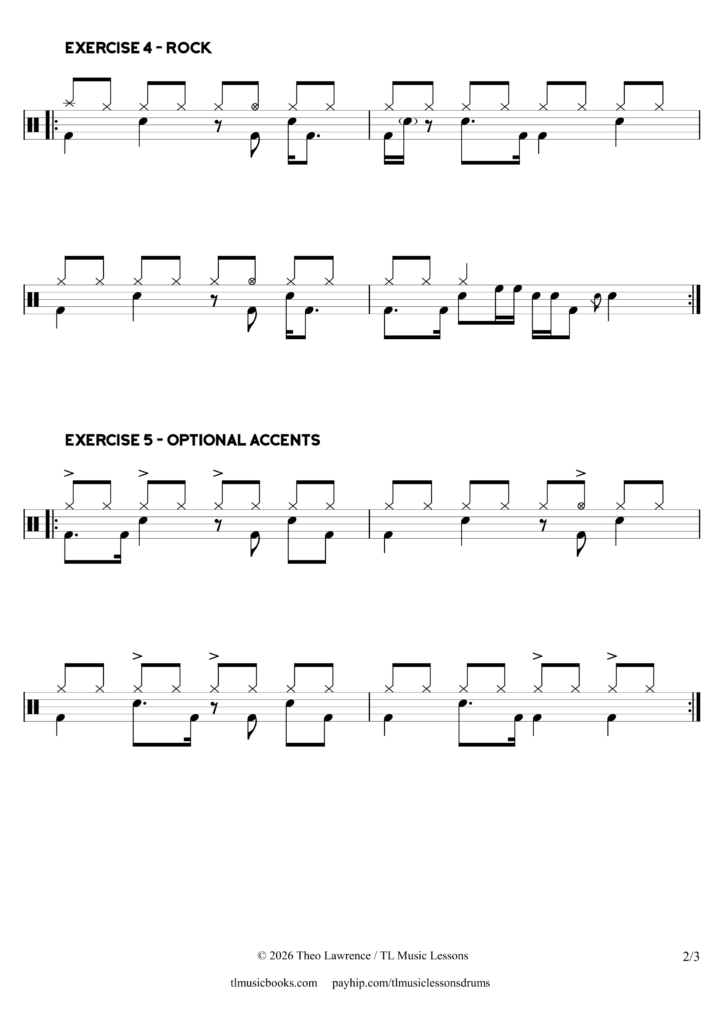
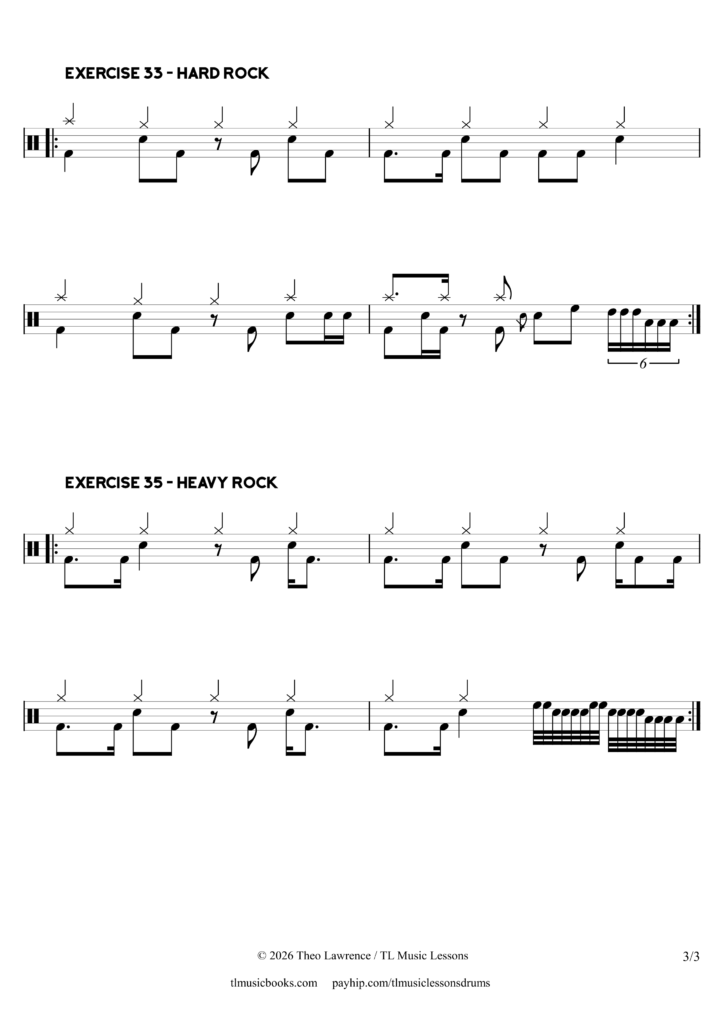
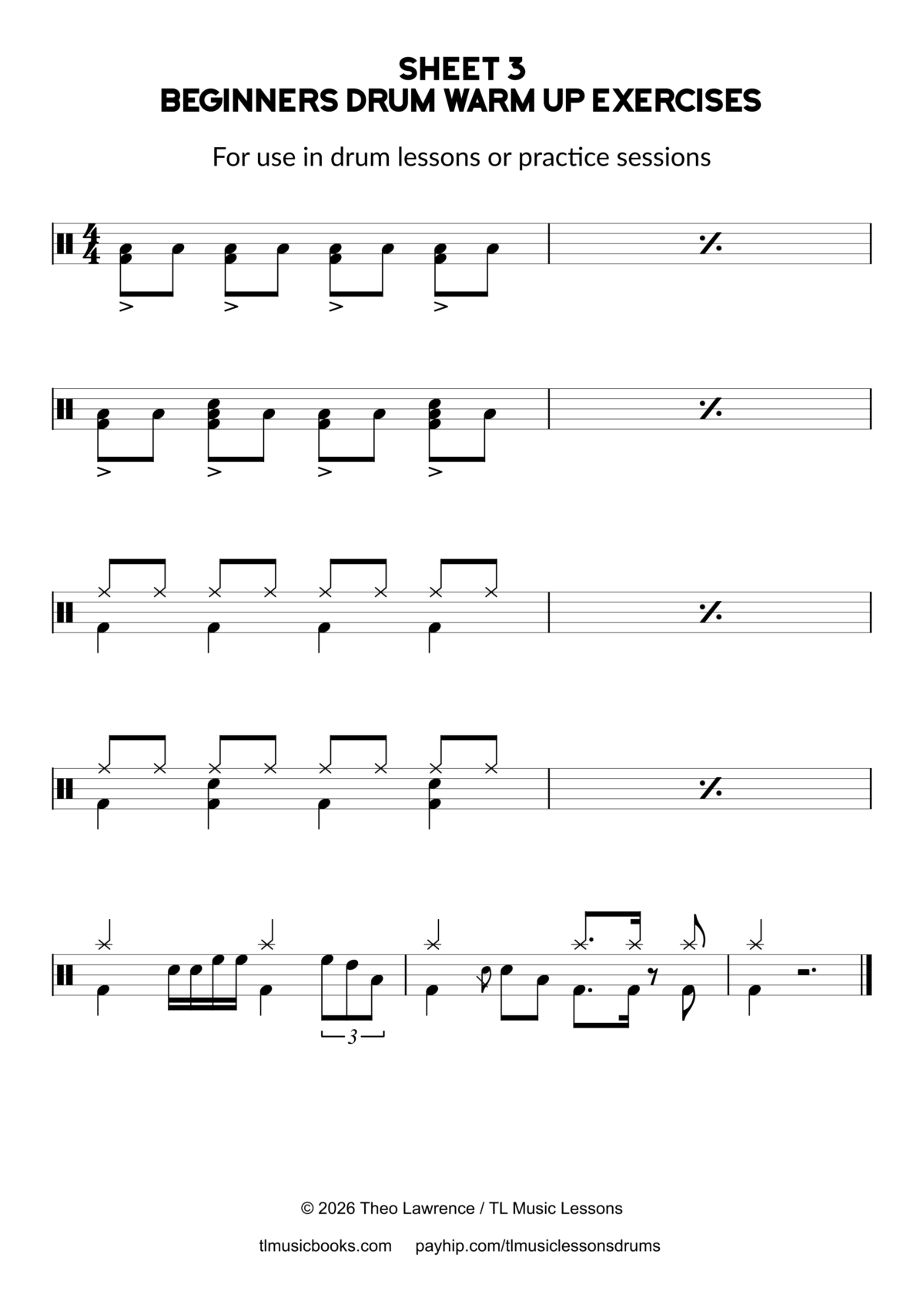
This is the first sheet in a collection of drum warm up exercises that will be made into a pdf ebook. You can use and print the main image on this website for educational use, or you also have the option of purchasing a PDF copy of Drum Warm Up Exercises for Advanced Beginners – Sheet 1.

In the sheet there is a snare drum rhythm exercise that has be made to sound good when repeated. Drummers should aim to increase the speed once comfortable with the rhythms. Likewise for the other exercises too. Start off slow and build up confidence and ability before going fast.

The flams exercise should be played by playing R L R L on all 8th notes, which is why one of the flams is played with the left hand playing the louder part of the flam, because it’s on one of the off-beat 8th notes. The second bar could be played R L R L or the 8th notes could be changed into paradiddles, meaning the second flam would be played with the left hand on the stronger note. Left handers will need to do the opposite to all of this.

The swing beat could easily be made harder but this could be the first time some drummers have been introduced to it so I’ve kept it fairly simple. The 8th notes are to be played with swing on the ride cymbals. If you don’ know what that means, have a listen to The Pink Panther theme tune and listen to the ride cymbals.

View Sheet 2 →

Drum Lesson Warm Up – 6th Jan 2026

Drum lesson warm up for advanced beginners and early intermediate levels.

Since posting this, I have focussed on creating an ebook with similar content, so the title has changed a little bit and it’s now the 2nd exercise sheet of the book. You can use the image on here and print it if needed, or you can also purchase PDF of Sheet 2 – Drum Warm Up Exercises for Advanced Beginners to Early Intermediate.

This Drum lesson warm up for advanced beginners and early intermediate levels is a summary of some of the exercises I worked on today with my students. This will probably be of use to any drummers wanting some original exercises to work on as part of a drum lesson or to self learn.

There are two exercises with sextuplets, accents and the use of a paradiddle-diddle (RLRRLL).

There are exercises based on one drum beat with examples of how you can develop it.

View Sheet 3 →

← Back to Sheet 1

Page 5 – 25 Hi Hat Patterns with drum beat examples

Free PDF Download

Page 1 | Page 2 | Page 3 | Page 4 | Page 5

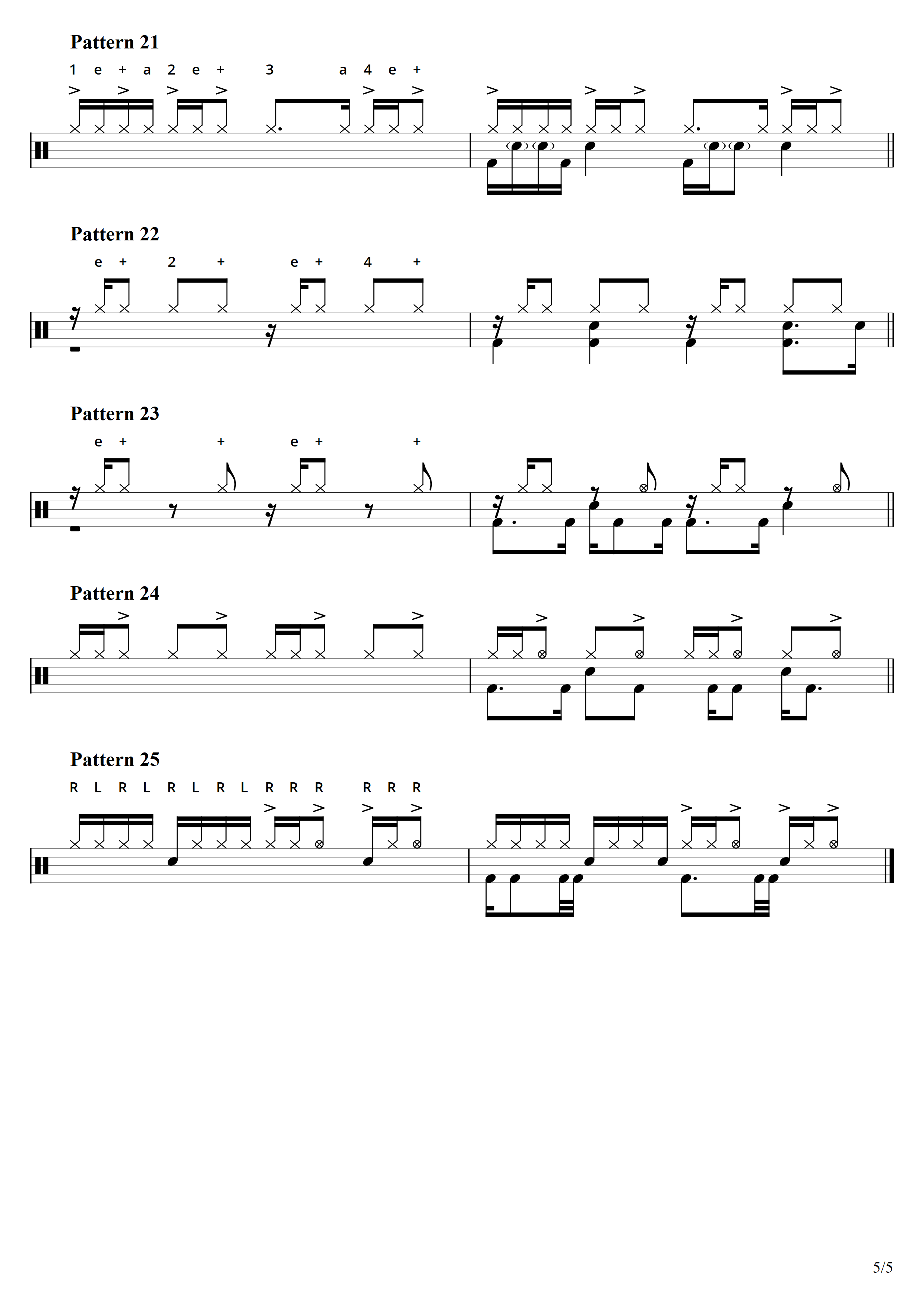
This page continues from the last one, combining 8th notes and 16t notes to create hi hat patterns.

These hi hat patterns and drum beat examples are for styles such as rock, pop, funk, soul, all in a 4/4 time signature.

These patterns can be used with basic drum beats or more complicated ones.

The Moeller technique works well on patterns 5, 6, 9, 17, 18, 19, 20, 24, 25.

You could also add 8th note or 16th note swing to all of the patterns.

> = Accents (play louder). You can play the accents on the top of the hi hat for a clean sound.

You could play the accents on the hi hat edge with 45 degree stick angle, for a heavier sound.

Circle around the hi hat means open hi hat.

Page 4 – 25 Hi Hat Patterns with drum beat examples

Free PDF Download

Page 1 | Page 2 | Page 3 | Page 4 | Page 5

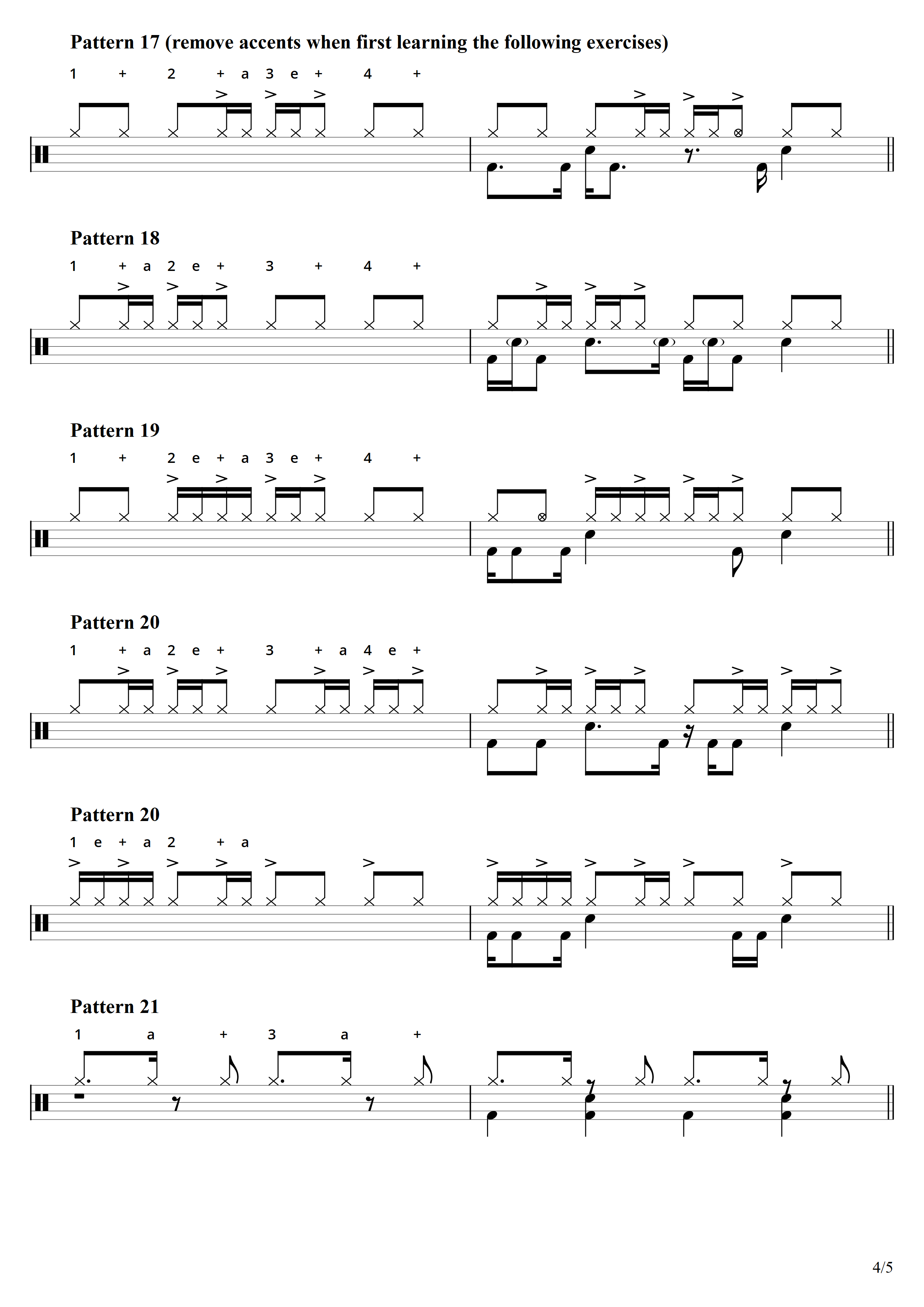
This page and the next page concentrates on combinations of 8th notes and 16t notes to create hi hat patterns.

These hi hat patterns and drum beat examples are for styles such as rock, pop, funk, soul, all in a 4/4 time signature.

These patterns can be used with basic drum beats or more complicated ones.

The Moeller technique works well on patterns 5, 6, 9, 17, 18, 19, 20, 24, 25.

You could also add 8th note or 16th note swing to all of the patterns.

> = Accents (play louder). You can play the accents on the top of the hi hat for a clean sound.

You could play the accents on the hi hat edge with 45 degree stick angle, for a heavier sound.

Circle around the hi hat means open hi hat.

Page 3 – 25 Hi Hat Patterns with drum beat examples

Free PDF Download

Page 1 | Page 2 | Page 3 | Page 4 | Page 5

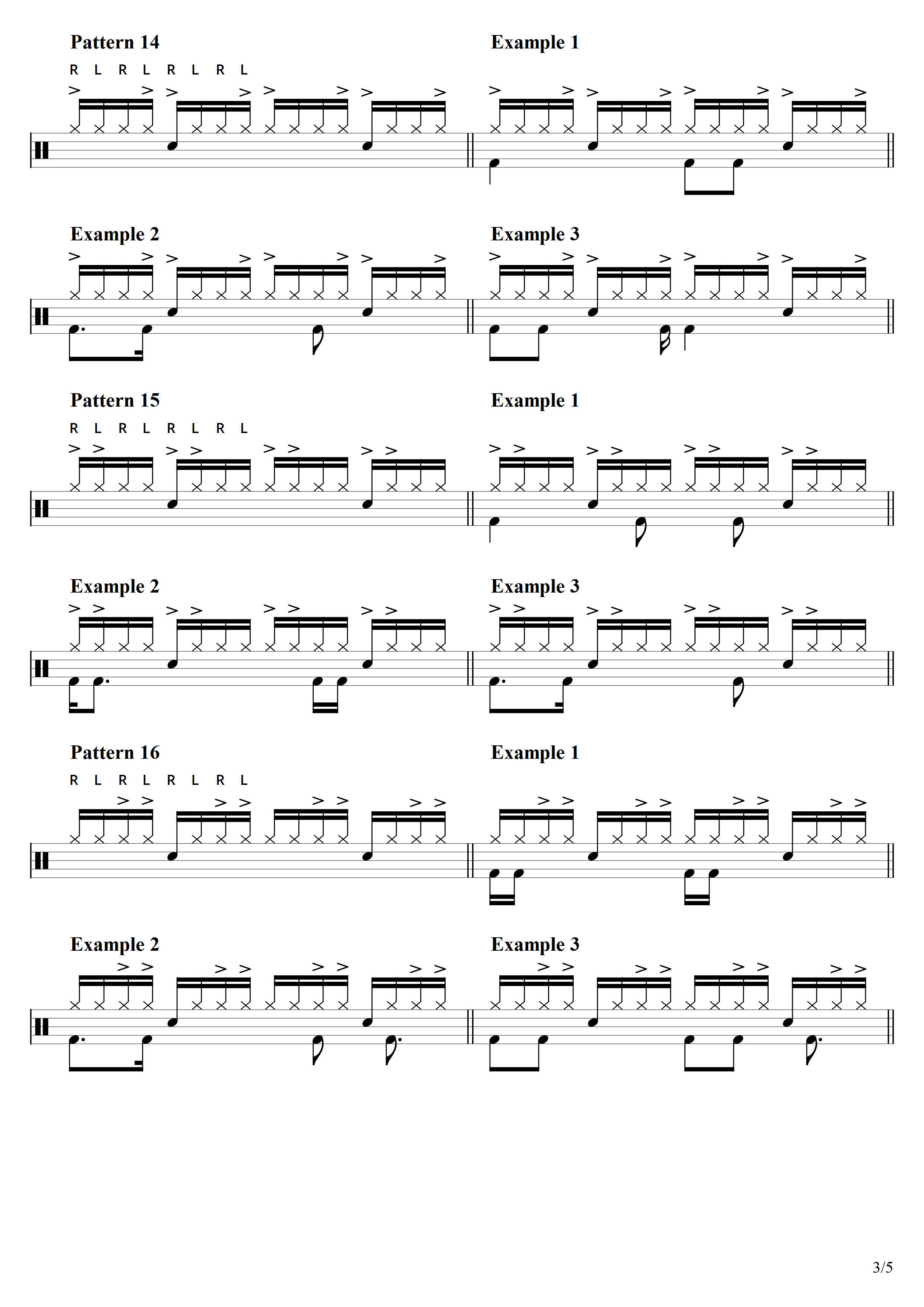
This page focusses on accents on the hi hats whilst playing 16th notes with 2 hands. Adding double strokes to some or all of the non accents would be one way to extend this sheet further, as would adding open hi hats and appling different drum beats such as the beats in this book: 90 intermediate drum beats focusing on the bass drum – PDF ebook. You can also find more 16th note exercises with accents here: Accent Exercises with 16th notes – PDF ebook

These hi hat patterns and drum beat examples are for styles such as rock, pop, funk, soul, all in a 4/4 time signature.

These patterns can be used with basic drum beats or more complicated ones.

The Moeller technique works well on patterns 5, 6, 9, 17, 18, 19, 20, 24, 25.

You could also add 8th note or 16th note swing to all of the patterns.

> = Accents (play louder). You can play the accents on the top of the hi hat for a clean sound.

You could play the accents on the hi hat edge with 45 degree stick angle, for a heavier sound.

Circle around the hi hat means open hi hat.

Page 2 – 25 Hi Hat Patterns with drum beat examples

Free PDF Download

Page 1 | Page 2 | Page 3 | Page 4 | Page 5

These hi hat patterns and drum beat examples are for styles such as rock, pop, funk, soul, all in a 4/4 time signature.

These patterns can be used with basic drum beats or more complicated ones.

The Moeller technique works well on patterns 5, 6, 9, 17, 18, 19, 20, 24, 25.

You could also add 8th note or 16th note swing to all of the patterns.

> = Accents (play louder). You can play the accents on the top of the hi hat for a clean sound.

You could play the accents on the hi hat edge with 45 degree stick angle, for a heavier sound.

Circle around the hi hat means open hi hat.

Page 1 – 25 Hi Hat Patterns with drum beat examples

Free PDF Download

Page 1 | Page 2 | Page 3 | Page 4 | Page 5

These hi hat patterns and drum beat examples are for styles such as rock, pop, funk, soul, all in a 4/4 time signature.

These patterns can be used with basic drum beats or more complicated ones.

The Moeller technique works well on patterns 5, 6, 9, 17, 18, 19, 20, 24, 25.

You could also add 8th note or 16th note swing to all of the patterns.

> = Accents (play louder). You can play the accents on the top of the hi hat for a clean sound.

You could play the accents on the hi hat edge with 45 degree stick angle, for a heavier sound.

Circle around the hi hat means open hi hat.

Drum beats and drum fills in different time signatures – Sheet 4 – 40 Beats and Fills Book 2

PDF Ebook Buy Now →

Next Page: Sheet 5 →

Here is Exercise Sheet 4 from 40 Beats and Fills Exercises Book 2.

The drum beats and drum fills are played in different time signatures (3/4, 5/4 and 2/4), as well as changing to and from the usual 4/4 bar length.

Time Signature Changes: “Do not panic – they’re quite easy”, as I say in the video!

The time signatures are not too hard And sometimes you don’t even need to worry about counting them. There are situations where you might need to count them and they might be harder depending on what is contained in the bars, but thes have been written for newcomers to time signatures in mind, so there are no real suprises – it’s meant to be a straightforward introduction.

On exercise 3, I have taken away the stepped hi hat so it’s 3 way coordination. The stepped hi hat is included on exercise 3 with the 5/4 bar, so there’s an added challenge there.

Video Demonstration

You can download the pdf for this page by buying the book or downloading the free preview on the product page.

There are more free pages like this one, use the the navigation below to view them.

← Go back to Sheet 3
Go forward to Sheet 5 →
Buy the full PDF ebook →

How To Read The Notation – Inside the book: 40 Beats and Fills Exercises Book 2

PDF Ebook Buy Now →
Next Page: Warm Ups →

Here is part 1 of inside the book of “40 Beats and Fills Exercises Book 2“.

As you can see in the featured image, this post is showing you how to read the drum notation in the book. This is going to to be quite hard to understand without any prior knowledge or tuition, but I have made a video (see below) that shows you which drums are which and how to read and play the swing, rests, basic notes, and time signatures.

Here are all of the drum voices and notation markings on the sheet: crash cymbal, open hi hat, accent, ride cymbal, closed hi hat, tom 1 (small tom), tom 2 (medium tom), snare drum, floor tom, bass drum, stepped hi hat, cross stick snare drum, triplet swing, 3/4 bar, 5/4 bar, 6/8 bar, 4/4 bar, crotchet rest, quaver rest, quaver, crotchet.

There are more free pages like this one, use the the navigation below to view them.

Go forward to the Warm Up Sheet →
Buy the full PDF ebook →

10 Double Stroke Rudamental style exercises

Video showing Exercise 1 & 2:

There are quite a few double stroke rudiment exercises in the 40 official drum rudiments, but none of these are in them. While the ’40 drum rudiments’ cover many of a drummers needs, in terms of practicing, there are many more double stroke exercises that are useful to learn.

The 10 rudiment – style snare drum exercises here are all involving double strokes. These snare drum exercises are all rhythms that I use quite often in my drumming, so to me they are quite essential I believe.

When learning rudiments, I was always taught that they are preparing you for possible eventualities in drumming – for example by learning and practicing the flam with different leading hands, you have prepared for using it in drum fills in songs, in a variety of situations. So to me, all of these 10 rudiment exercises are essential patterns that you will need at some point as a drummer, so to master these, will be beneficial to you for when you meet the patterns elsewhere.

Here is how all of the exercises sound: