10 Practice Pad Exercises – beginners to intermediate

These 10 practice pad exercises are redesigned and edited exercises from the ebook Beginners Drum Book 2023. I have designed these to be useful for reading on a mobile screen as well as for any other device. It also looks good printed out, which you can do if you purchase 10 Practice Pad Exercises (PDF).

  • Can be used as warm ups or for drum lesson content
  • Many of the exercises can be played slowly by beginners and faster by intermediate players
  • Use with and without a metronome
  • For practice pad or snare drum
Continue reading “10 Practice Pad Exercises – beginners to intermediate”

6 Rock Exercises with Drum Beats and Fills

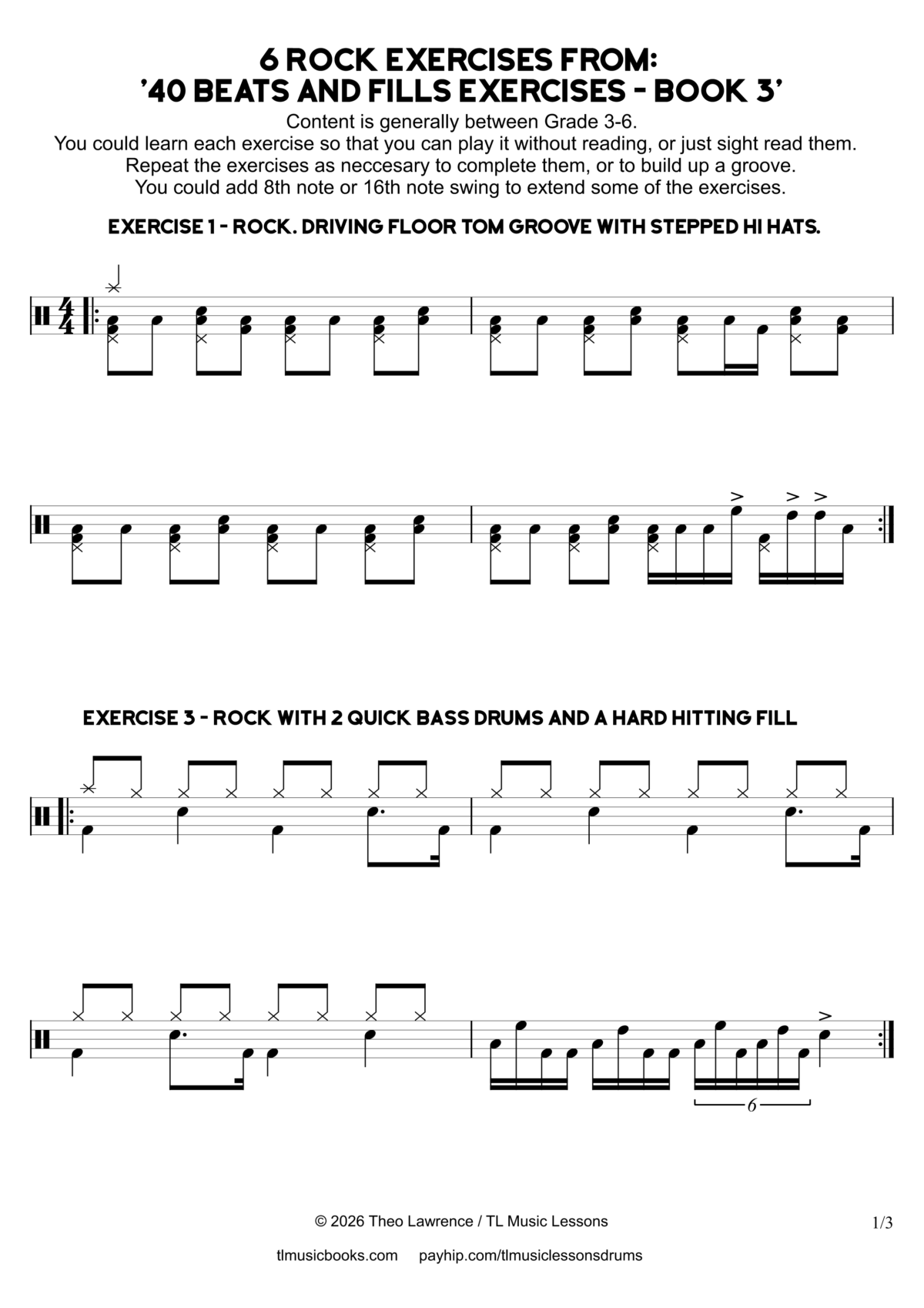
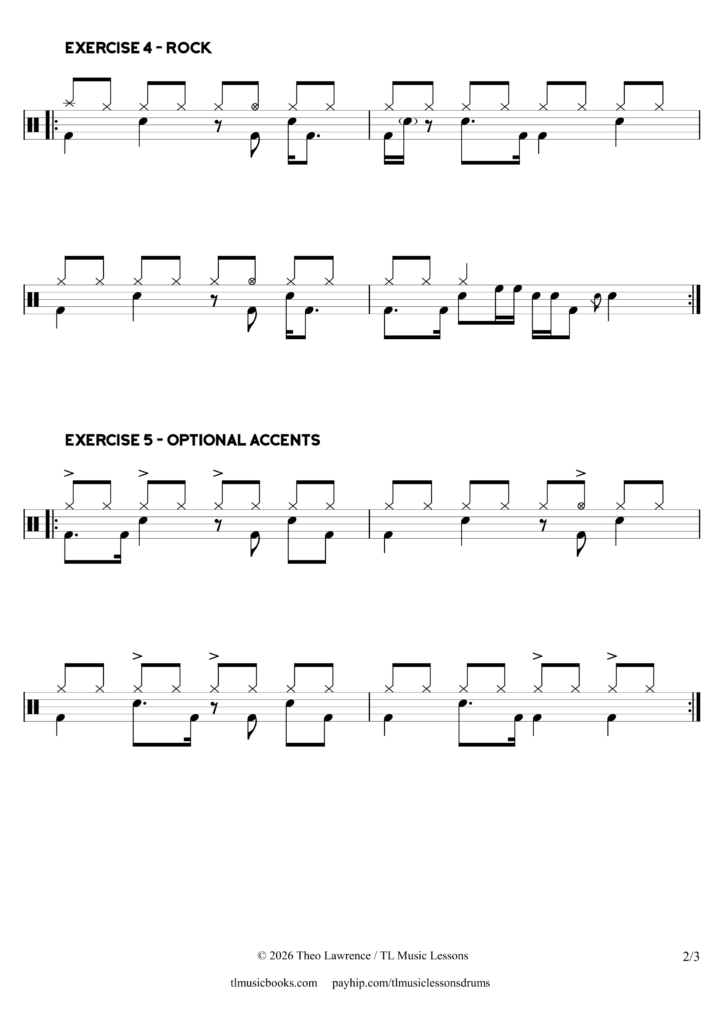
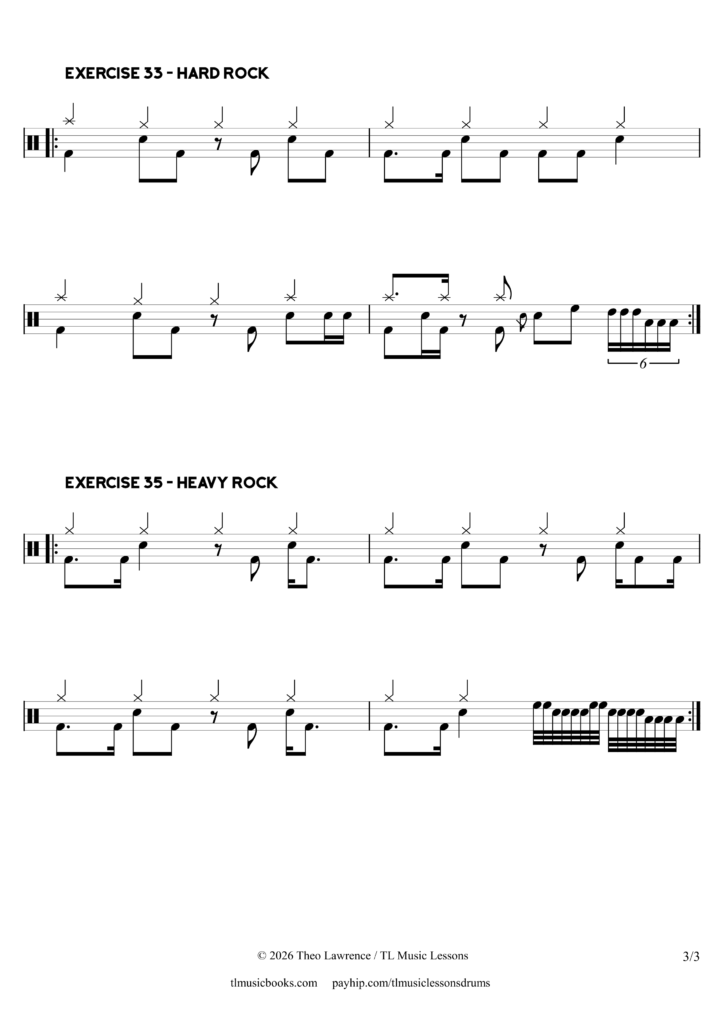
These 6 Rock Exercises are selected from the pdf ebook ‘40 Beats and fills Exercises – Book 3‘.

I have selected these 6 exercises because they give a good insight to the book as well as being a really useful resource on it’s own. Perhaps a drum teacher would print this off for their pupils to work on, or a drummer might want to focus on rock drumming and use this on it’s own for several sessions.

The difficulty levels range from about grade 3 to grade 6, which I would say is advanced beginner to intermediate.

Below is a copy of the other two pages. You can also get the PDF file from here: https://payhip.com/b/JESGw

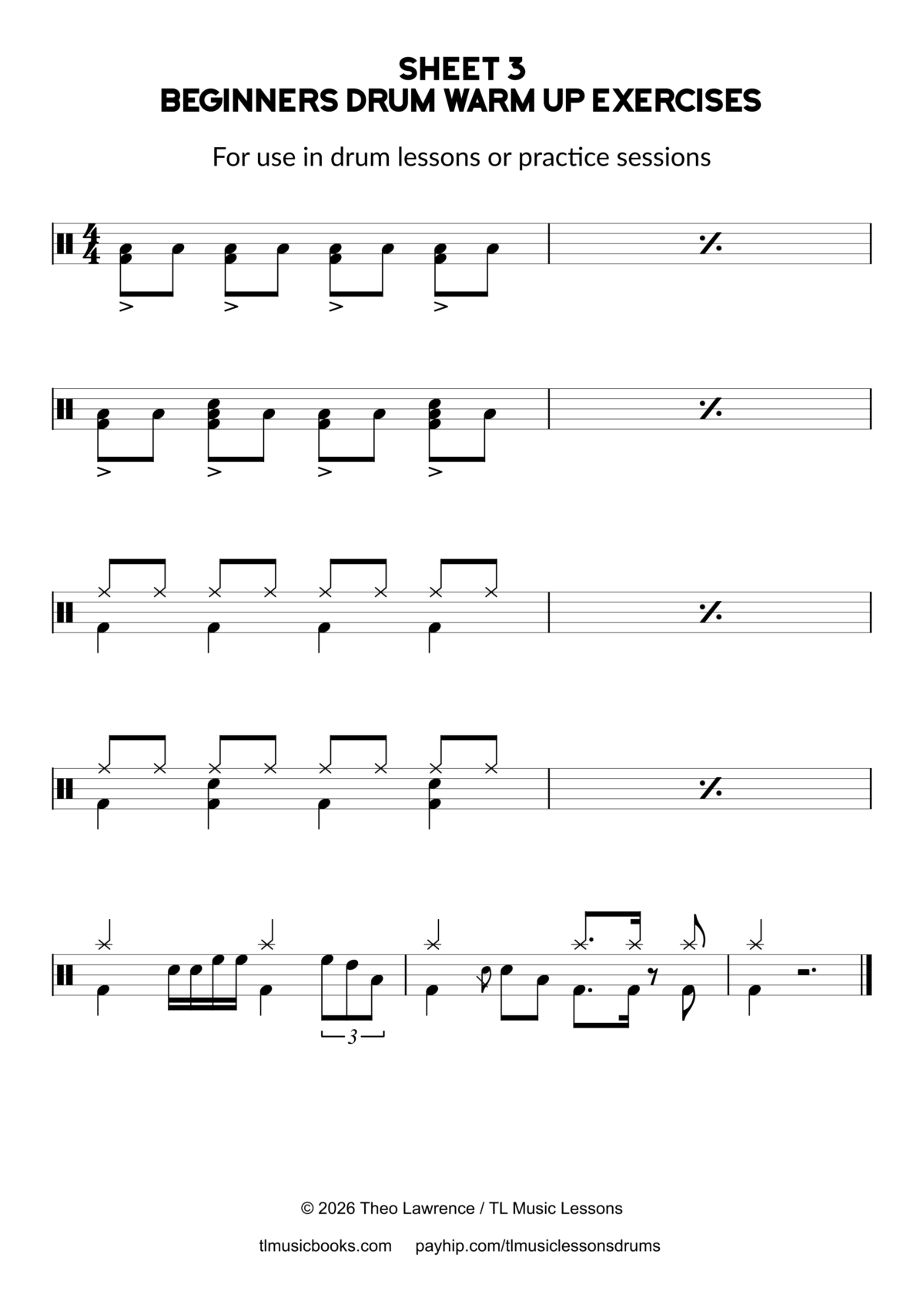
Sheet 3 – Beginners Drum Warm Up Exercises

Free PDF Download

Beginners Drum Warm Up Exercises

The difficulty on this sheet goes slightly higher with adding 8th notes to the drum beats and the drum fills are a little more advanced too, especially the rhythm of the crash and bass drum hits at the end. A drum teacher can help with this. Once you hear the rhythm it shouldn’t be too hard. You can hear the same rhythm of the ending crash cymbals (in the penultimate bar of this sheet) at the start of a famous song called We Found Love by Rhianna. Whenever I see this rhythm in any music, I always think of this song! I’m sure the rhythm has stronger roots elsewhere, perhaps in Latin American carnival type music, but that’s just what sticks in my mind.

To further disect the final line of fills, you also will need to play a triplet at the end of the first bar whilst counting ‘4 trip let’ and on the second bar there is a flam on beat 2 followed by a floor tom on beat 2 +.

Going back to the start, it’s also important to observe the driving accents on the beat, which should be played on the floor tom, and not really the bass drum. This also goes for the second line. Lines 3 and 4 could also be played with these driving accents on the ride cymbal if you would like to.

← Sheet 2

Drum Warm Up Exercises for Advanced Beginners – Sheet 1

Advanced beginners drum warm up exercises for use in drum lessons, or for starting a practice or learning sessions.

Advanced beginners drum warm up exercises for use in drum lessons, or for starting a practice or learning sessions.

This is the first sheet in a collection of drum warm up exercises that will be made into a pdf ebook. You can use and print the main image on this website for educational use, or you also have the option of purchasing a PDF copy of Drum Warm Up Exercises for Advanced Beginners – Sheet 1.

In the sheet there is a snare drum rhythm exercise that has be made to sound good when repeated. Drummers should aim to increase the speed once comfortable with the rhythms. Likewise for the other exercises too. Start off slow and build up confidence and ability before going fast.

The flams exercise should be played by playing R L R L on all 8th notes, which is why one of the flams is played with the left hand playing the louder part of the flam, because it’s on one of the off-beat 8th notes. The second bar could be played R L R L or the 8th notes could be changed into paradiddles, meaning the second flam would be played with the left hand on the stronger note. Left handers will need to do the opposite to all of this.

The swing beat could easily be made harder but this could be the first time some drummers have been introduced to it so I’ve kept it fairly simple. The 8th notes are to be played with swing on the ride cymbals. If you don’ know what that means, have a listen to The Pink Panther theme tune and listen to the ride cymbals.

View Sheet 2 →

Drum Lesson Warm Up – 6th Jan 2026

Drum lesson warm up for advanced beginners and early intermediate levels.

Since posting this, I have focussed on creating an ebook with similar content, so the title has changed a little bit and it’s now the 2nd exercise sheet of the book. You can use the image on here and print it if needed, or you can also purchase PDF of Sheet 2 – Drum Warm Up Exercises for Advanced Beginners to Early Intermediate.

This Drum lesson warm up for advanced beginners and early intermediate levels is a summary of some of the exercises I worked on today with my students. This will probably be of use to any drummers wanting some original exercises to work on as part of a drum lesson or to self learn.

There are two exercises with sextuplets, accents and the use of a paradiddle-diddle (RLRRLL).

There are exercises based on one drum beat with examples of how you can develop it.

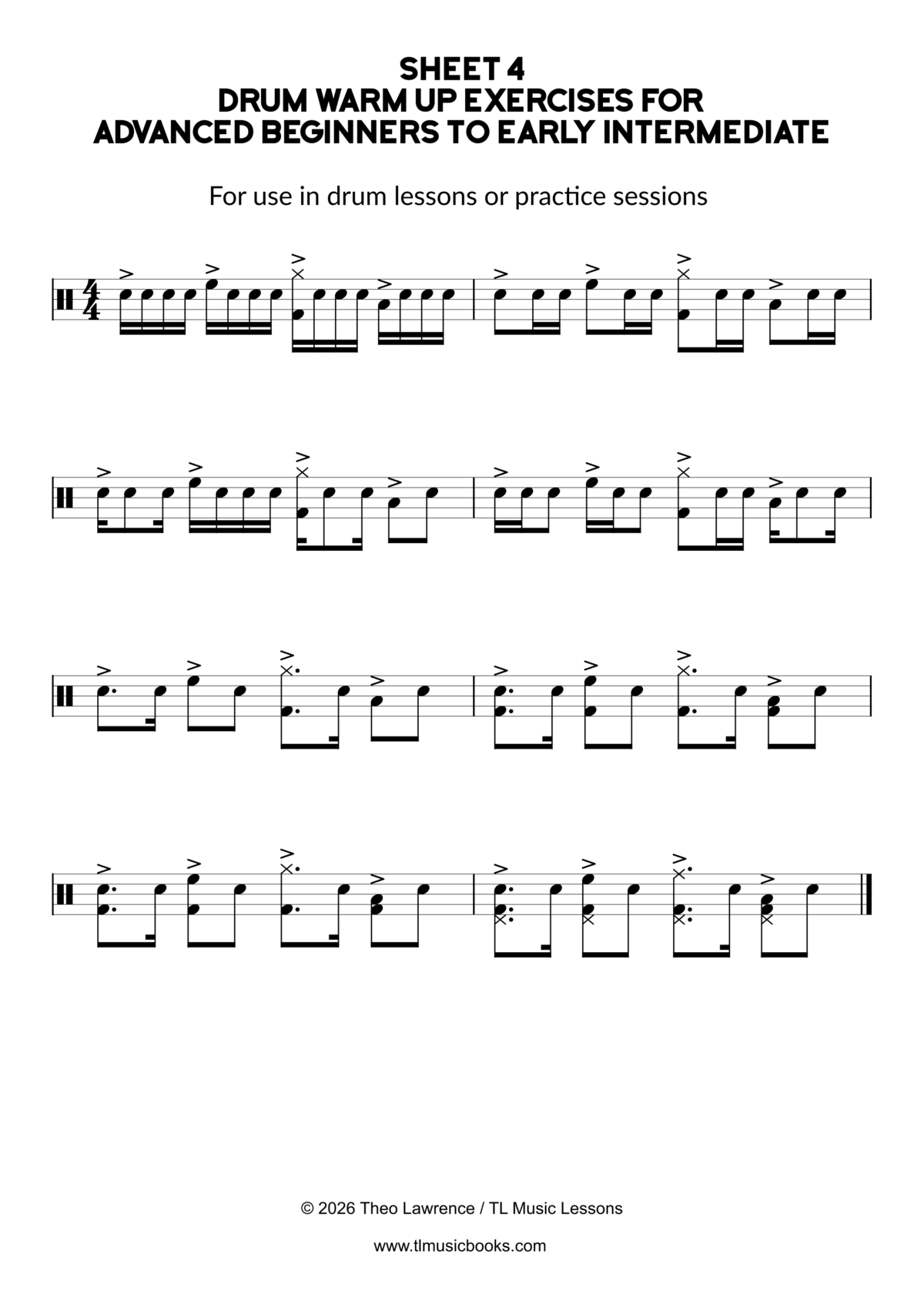
View Sheet 3 →

← Back to Sheet 1

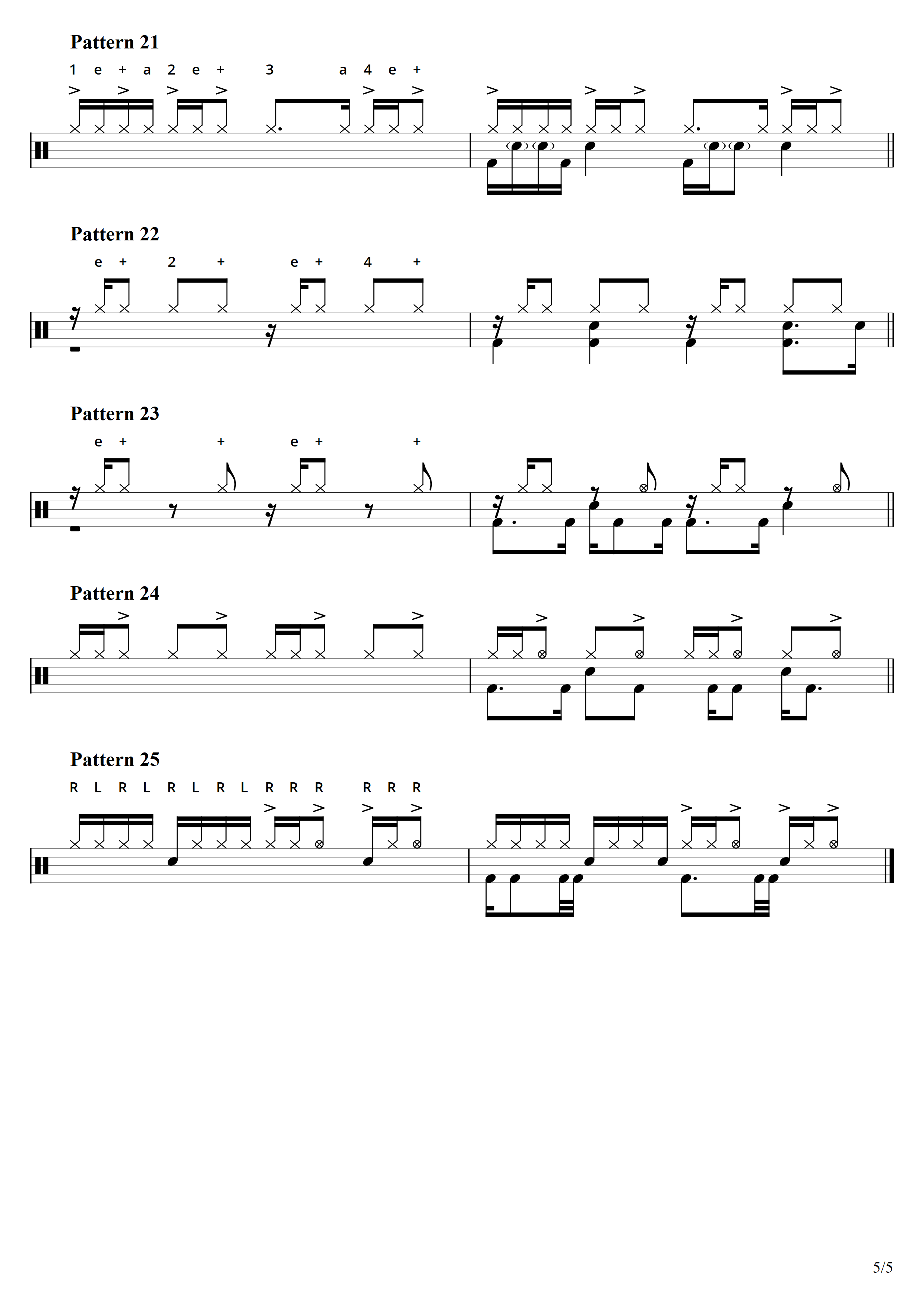
Page 5 – 25 Hi Hat Patterns with drum beat examples

Free PDF Download

Page 1 | Page 2 | Page 3 | Page 4 | Page 5

This page continues from the last one, combining 8th notes and 16t notes to create hi hat patterns.

These hi hat patterns and drum beat examples are for styles such as rock, pop, funk, soul, all in a 4/4 time signature.

These patterns can be used with basic drum beats or more complicated ones.

The Moeller technique works well on patterns 5, 6, 9, 17, 18, 19, 20, 24, 25.

You could also add 8th note or 16th note swing to all of the patterns.

> = Accents (play louder). You can play the accents on the top of the hi hat for a clean sound.

You could play the accents on the hi hat edge with 45 degree stick angle, for a heavier sound.

Circle around the hi hat means open hi hat.

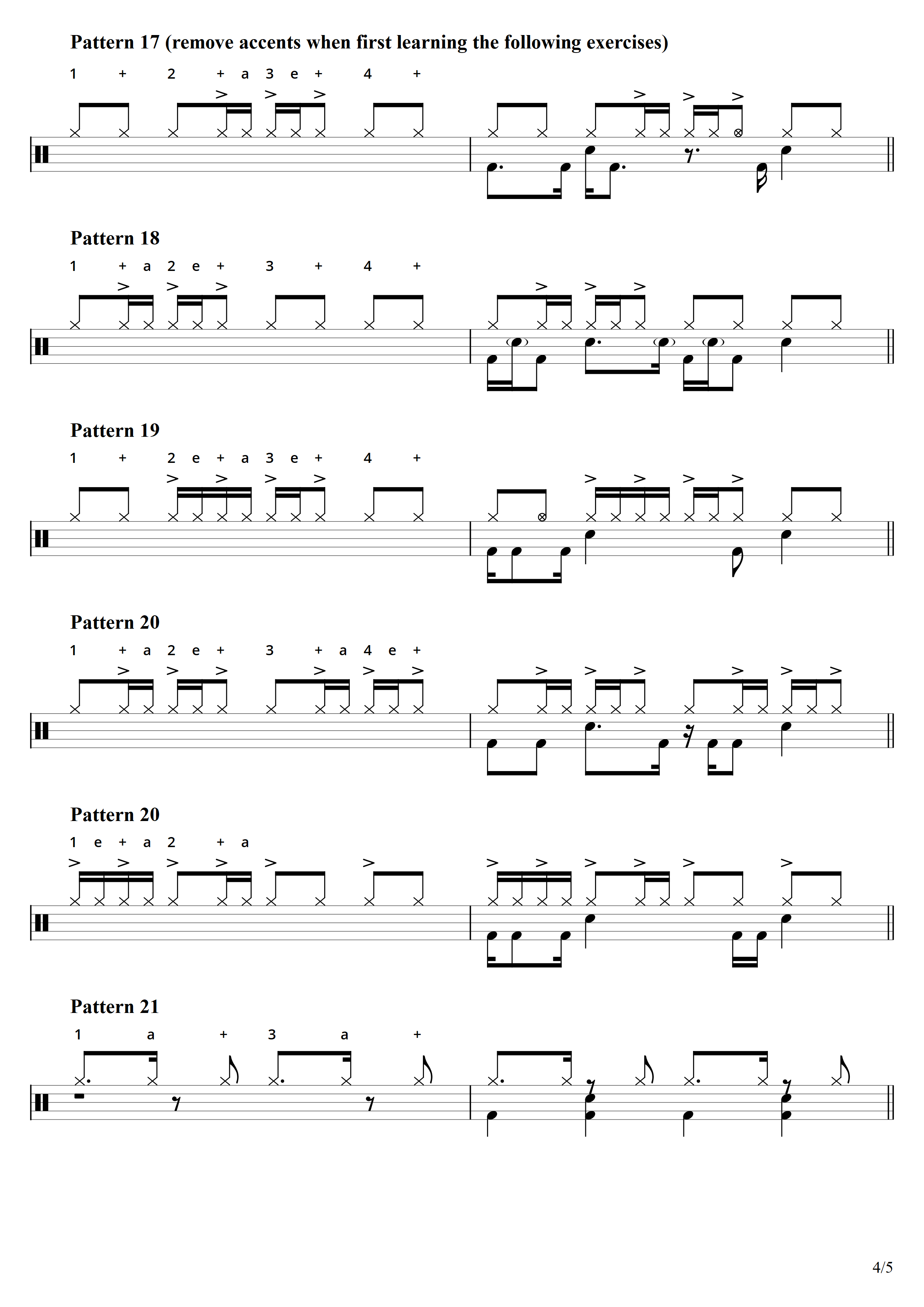
Page 4 – 25 Hi Hat Patterns with drum beat examples

Free PDF Download

Page 1 | Page 2 | Page 3 | Page 4 | Page 5

This page and the next page concentrates on combinations of 8th notes and 16t notes to create hi hat patterns.

These hi hat patterns and drum beat examples are for styles such as rock, pop, funk, soul, all in a 4/4 time signature.

These patterns can be used with basic drum beats or more complicated ones.

The Moeller technique works well on patterns 5, 6, 9, 17, 18, 19, 20, 24, 25.

You could also add 8th note or 16th note swing to all of the patterns.

> = Accents (play louder). You can play the accents on the top of the hi hat for a clean sound.

You could play the accents on the hi hat edge with 45 degree stick angle, for a heavier sound.

Circle around the hi hat means open hi hat.

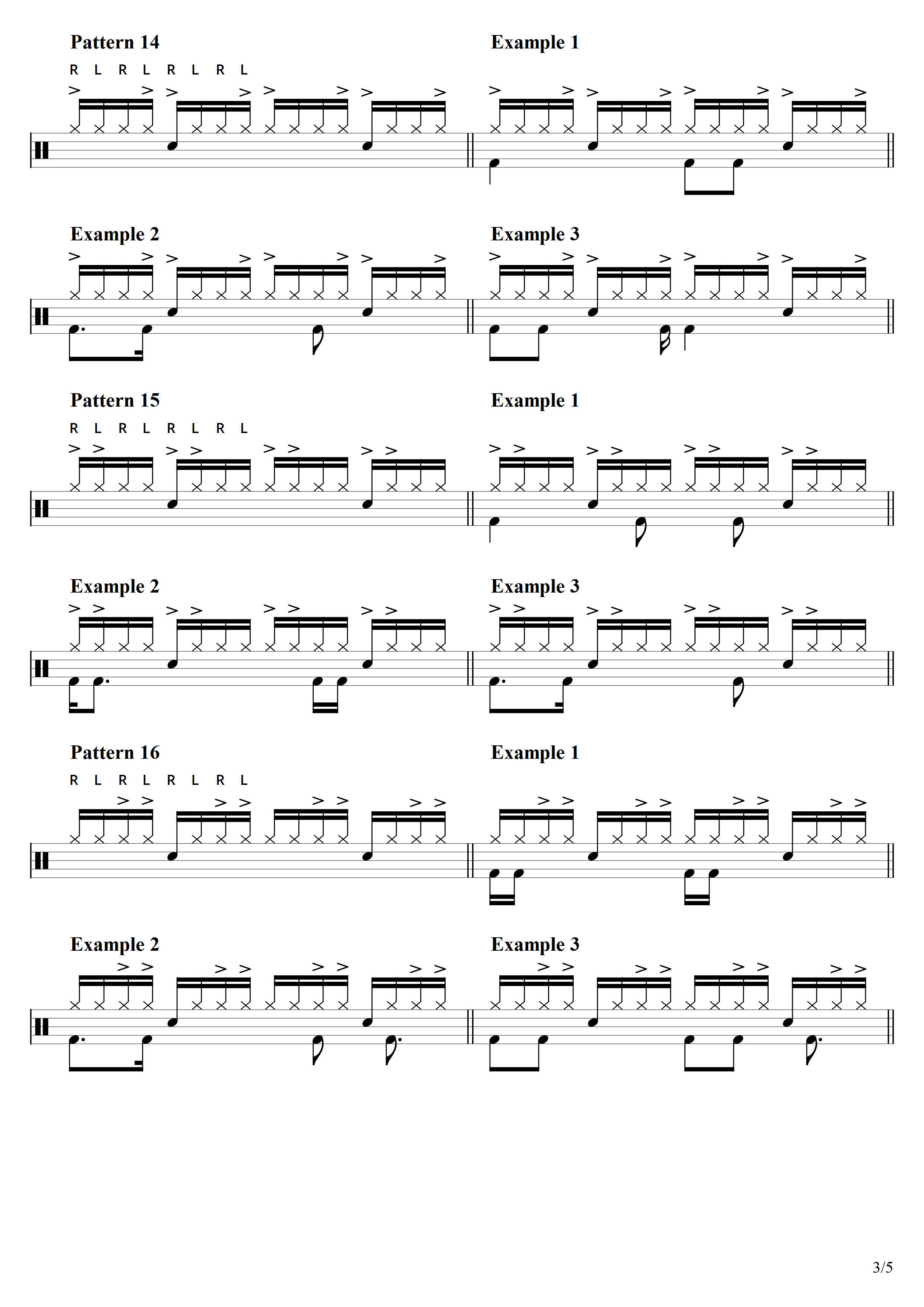
Page 3 – 25 Hi Hat Patterns with drum beat examples

Free PDF Download

Page 1 | Page 2 | Page 3 | Page 4 | Page 5

This page focusses on accents on the hi hats whilst playing 16th notes with 2 hands. Adding double strokes to some or all of the non accents would be one way to extend this sheet further, as would adding open hi hats and appling different drum beats such as the beats in this book: 90 intermediate drum beats focusing on the bass drum – PDF ebook. You can also find more 16th note exercises with accents here: Accent Exercises with 16th notes – PDF ebook

These hi hat patterns and drum beat examples are for styles such as rock, pop, funk, soul, all in a 4/4 time signature.

These patterns can be used with basic drum beats or more complicated ones.

The Moeller technique works well on patterns 5, 6, 9, 17, 18, 19, 20, 24, 25.

You could also add 8th note or 16th note swing to all of the patterns.

> = Accents (play louder). You can play the accents on the top of the hi hat for a clean sound.

You could play the accents on the hi hat edge with 45 degree stick angle, for a heavier sound.

Circle around the hi hat means open hi hat.

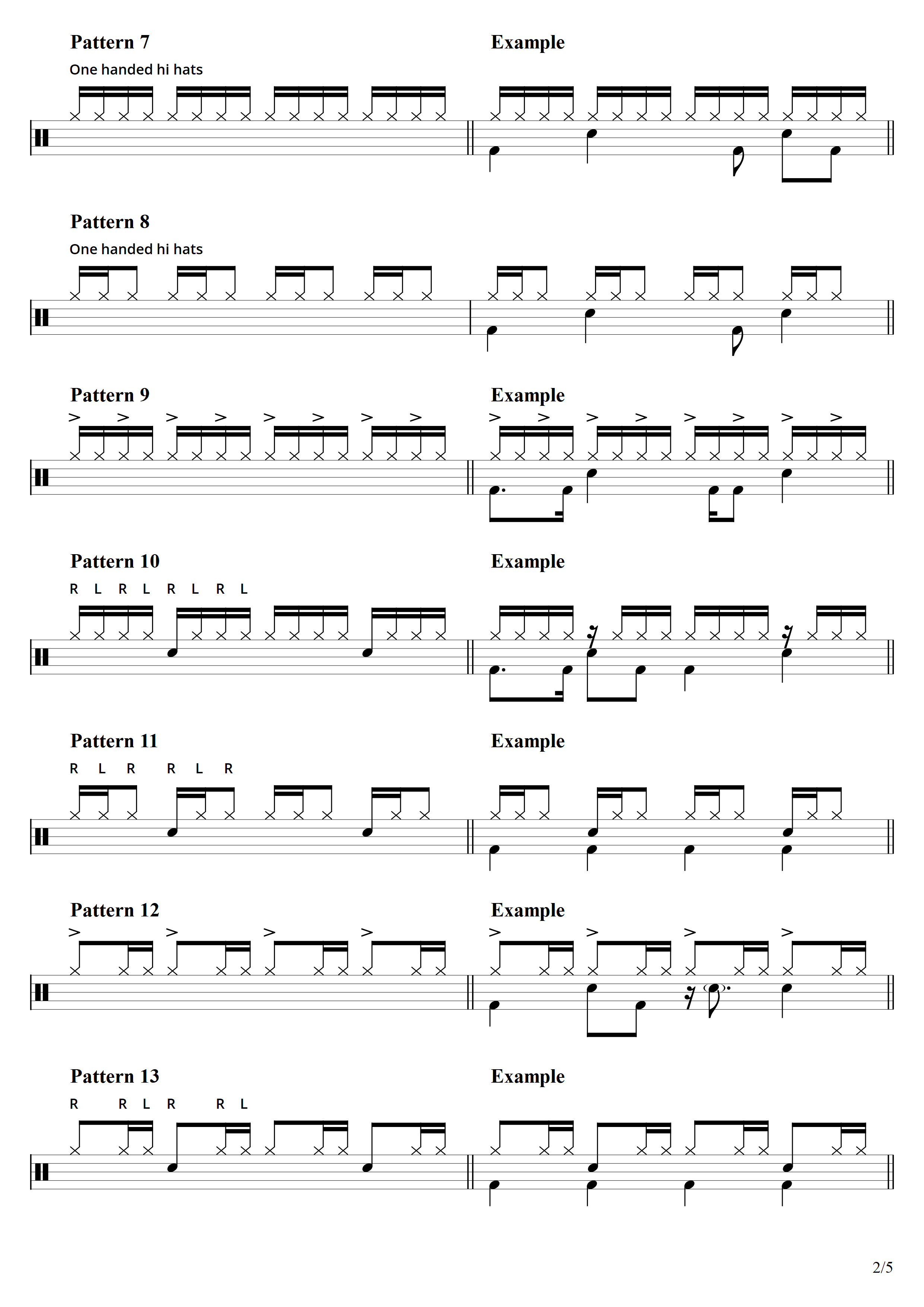
Page 2 – 25 Hi Hat Patterns with drum beat examples

Free PDF Download

Page 1 | Page 2 | Page 3 | Page 4 | Page 5

These hi hat patterns and drum beat examples are for styles such as rock, pop, funk, soul, all in a 4/4 time signature.

These patterns can be used with basic drum beats or more complicated ones.

The Moeller technique works well on patterns 5, 6, 9, 17, 18, 19, 20, 24, 25.

You could also add 8th note or 16th note swing to all of the patterns.

> = Accents (play louder). You can play the accents on the top of the hi hat for a clean sound.

You could play the accents on the hi hat edge with 45 degree stick angle, for a heavier sound.

Circle around the hi hat means open hi hat.

Page 1 – 25 Hi Hat Patterns with drum beat examples

Free PDF Download

Page 1 | Page 2 | Page 3 | Page 4 | Page 5

These hi hat patterns and drum beat examples are for styles such as rock, pop, funk, soul, all in a 4/4 time signature.

These patterns can be used with basic drum beats or more complicated ones.

The Moeller technique works well on patterns 5, 6, 9, 17, 18, 19, 20, 24, 25.

You could also add 8th note or 16th note swing to all of the patterns.

> = Accents (play louder). You can play the accents on the top of the hi hat for a clean sound.

You could play the accents on the hi hat edge with 45 degree stick angle, for a heavier sound.

Circle around the hi hat means open hi hat.