Free PDF Download:
Drum Practice Routines – Sheet 2 – Grade 1-2
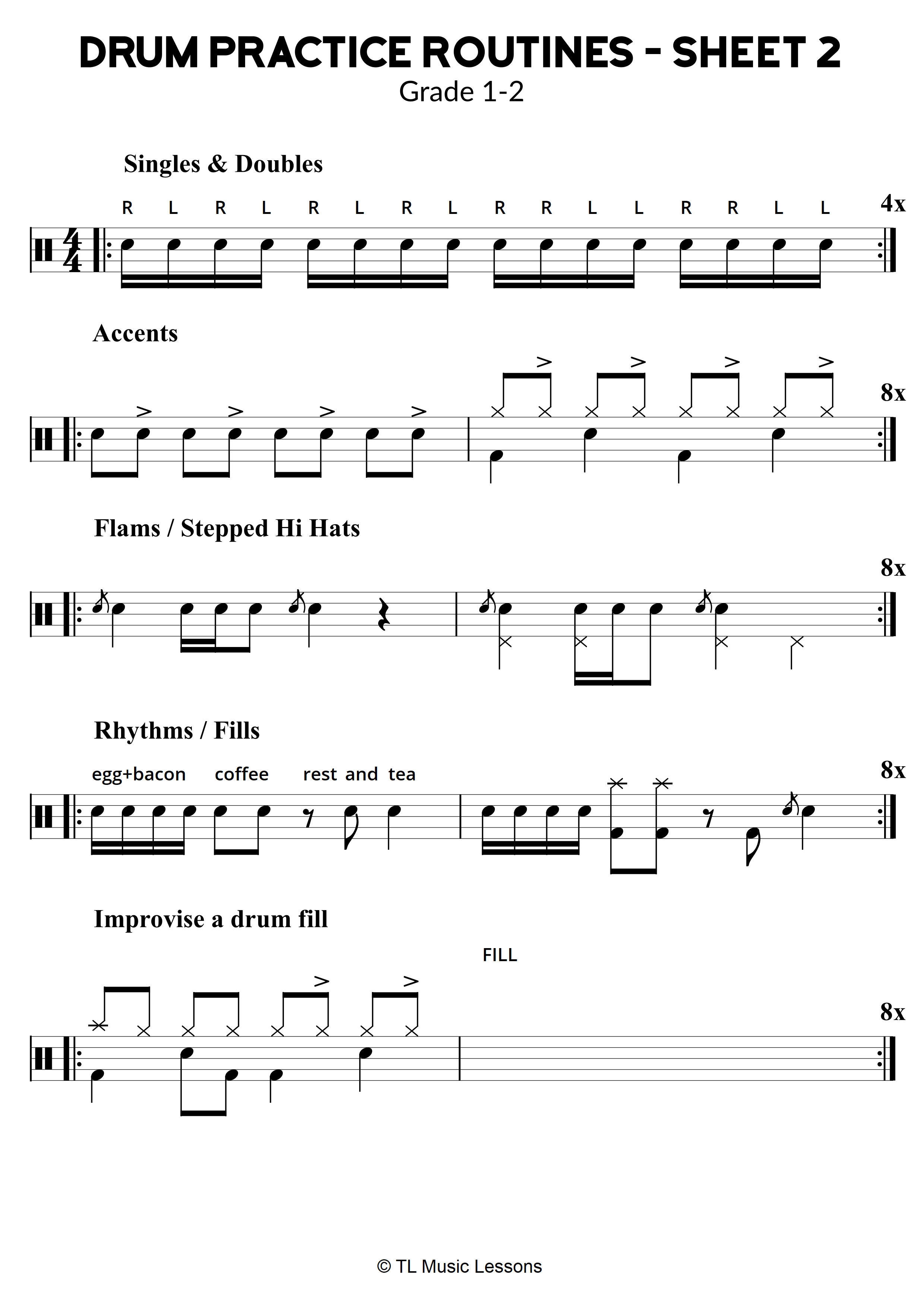
It’s still the summer holidays and most people are taking a well deserved break. I’ve been on holiday and I’m fully relaxed but I have a few lesson days coming up so I’m keeping on with lesson prep and making new material like this. I have made this sheet for some of my drum students to learn and practice over the holidays, which can be done in about 5 minutes and can be easily practiced several times per week.
In this practice routine, we are covering many of the fundamental parts of grade 1 and grade 2 material. First on the sheet we have singles and doubles (left handers need to play the opposite sticking to the ones shown). Whilst we don’t usually learn a proper double strokes technique until about grade 5 level, we still play doubles to get used to it, and you will just be hitting the drum with the same technique as you would for a single hit.
Secondly, we will be accenting (playing louder) the ‘off beat’, which means it’s not on the 1 2 3 4, it’s in between those. You could cound 1 + 2 + 3 + 4 +. The accents would then be on every +. Then, moving onto a basic drum beat in the second bar, the accents are played in the same place but this time you play them on the hi hats.
The flams and stepped hi hat section is for building up your stepped hi hat coorination aswell as for practicing the all important flam. Make sure the stick height for the quiet note in the flam is kept quite close to the drum (2 to 4 inches depending on the volume). The stick can start at a much higher position for the loud note in the flam.
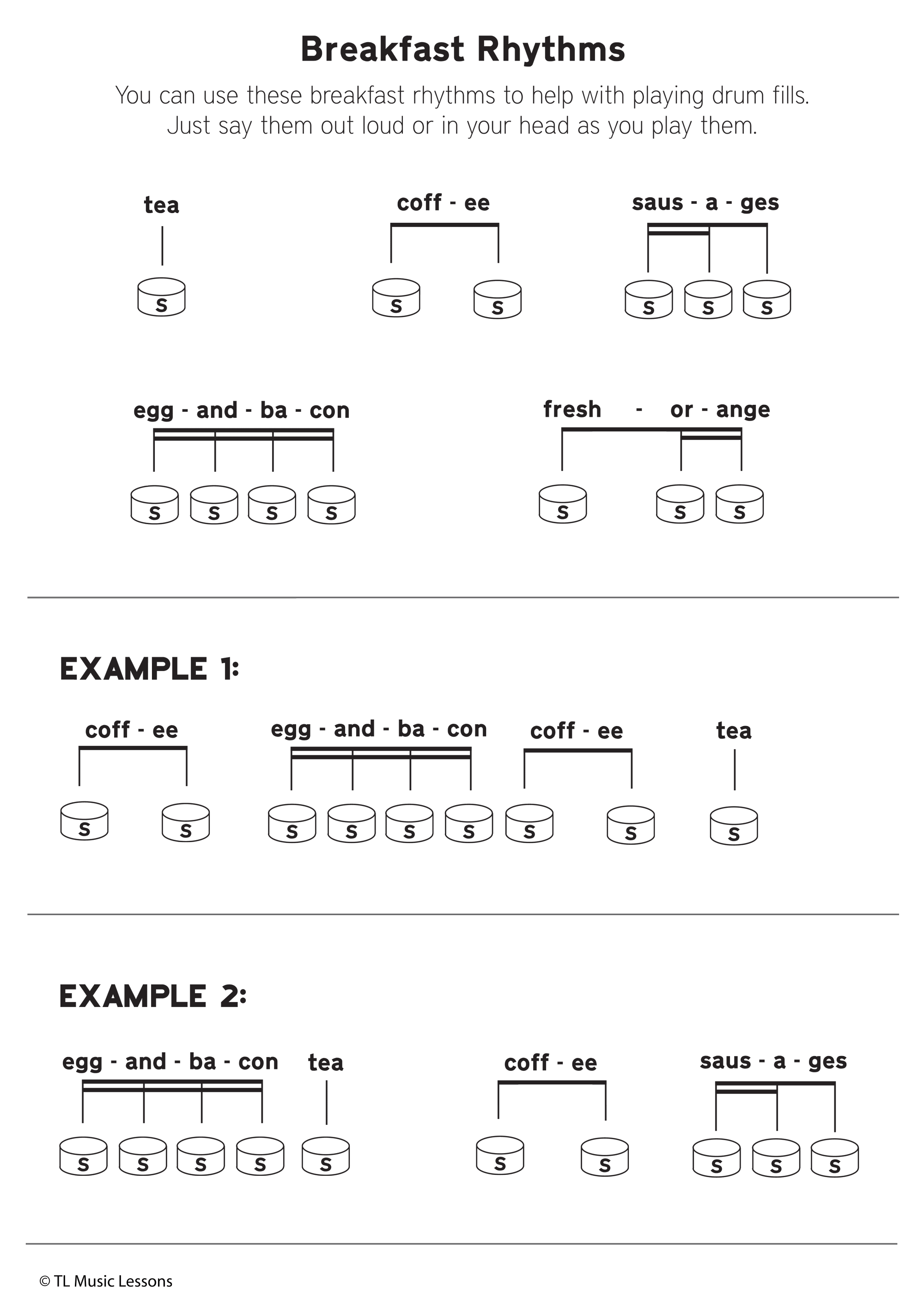
For the rhythm/fills section, I have included ‘breakfast rhythm’ counting to help. If you say the words at the same time as playing the rhythm, it should help you. The rhythm on the drum fill is the same as the one in the first bar on the snare drum, so it’s a nice exercise that flows.
Lastly, many students complain about improvisation, so it’s important to practice this until confidence is higher. Start off with really easy drum fills lasting for 1 bar and build up your confidence with each practice.
Related: Drum Practice Routines – Sheet 1 – Grade 1-2