Accent Techniques – Down, Tap, Up, Full Strokes

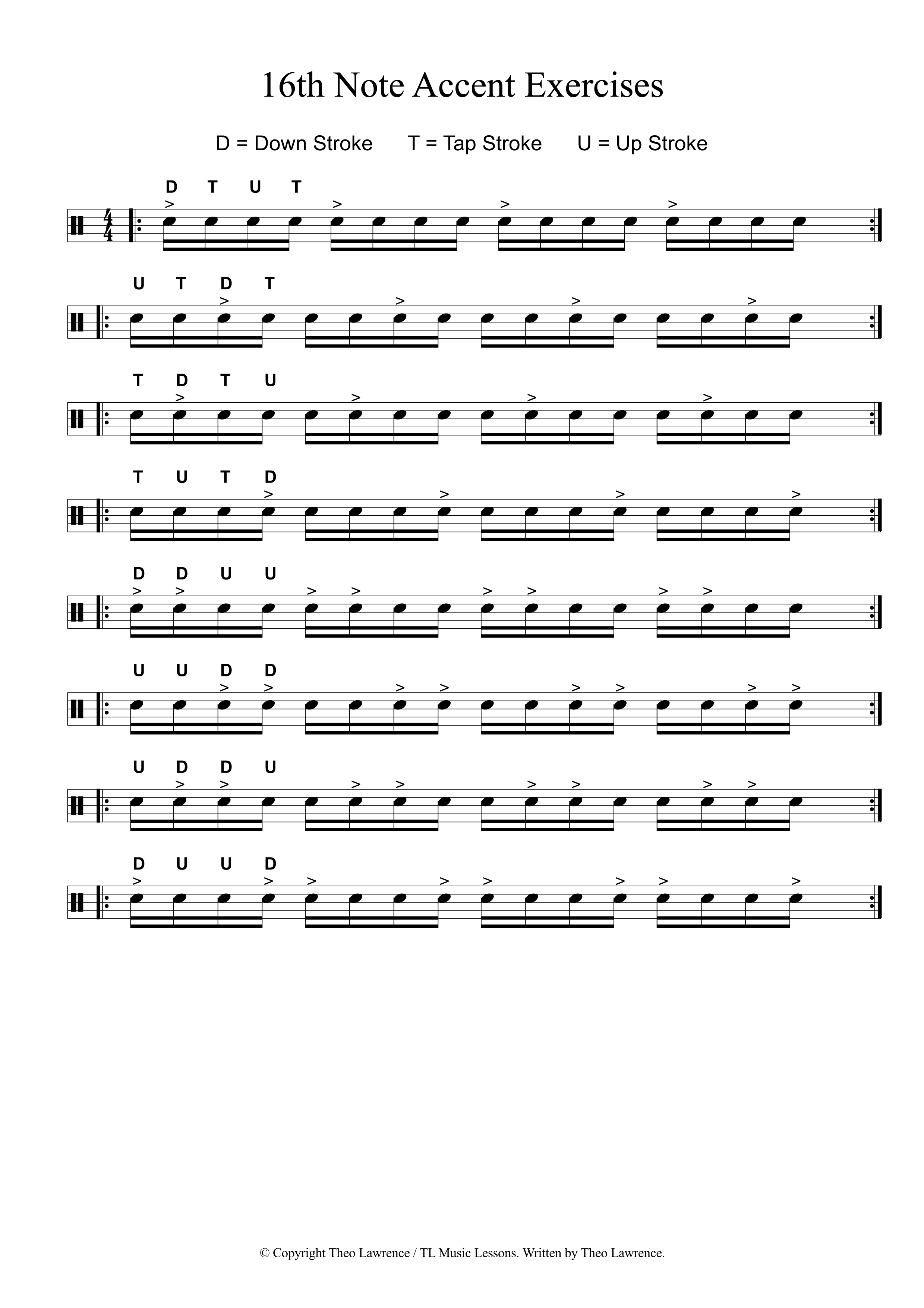
When you play accents, you should ideally use 3 different stick strokes. These are tap stroke, up stroke, and down stroke.

Tap Stroke

You would play a tap stroke if you have just played a quiet note with that hand, and the next note with that hand is another unaccented note.

The tap stroke stick position should start about an inch or a few cms away from the snare drum. Move the stick straight down and hit the drum quietly, before coming straight back up and returning to the starting point.

Up Stroke

You would play a tap stroke if you have just played a quiet note with that hand, and the next note with that hand is an accent.

The up stroke should start in the tap position, and play a tap stroke, but instead of returning to the start position, the stick should end up much higher, somewhere between a 45 and 90 degree angle to the snare drum.

Down Stroke

You would play a Down stroke if you have just played an accent with that hand, and the next note with that hand is an unaccented note.

The stick position should start somewhere between a 45 and 90 degree angle to the snare drum. This stroke should be a loud stroke. Move the stick quickly to produce the loud stroke and finish in the starting position of the tap stroke.

The downstroke produces accents, which look like this: >

Full Stroke

You would play a Full stroke if you have just played an accent with that hand, and there is another accent to follow with that hand. The full stroke, which is played just like a down stroke, but instead of finishing in the tap position, the stick comes back to the starting position of the down stroke. So it plays a loud beat and comes straight back for another one.


Related:

→ The sheet in this post is Page 2 of this ebook: 10 Pages Of Accent Exercises With 16th Notes – PDF Ebook (includes double strokes exercises)
16th Note Hi Hat Grooves With Accents
Reading Buzz Rolls And Double Stroke Markings

16th Note Hi Hat Grooves With Accents

Here we have very basic snare and bass drum grooves, with challenging accented 16th note hi hat accent rhythms.

The Hi Hats should be played with 2 hands, with the leading hand moving over to the snare drum on beats 2 and 4.

Tip: You could play the accents on the Hi Hat edge, and the non-accents on the top of the Hi Hat, for a really good contrast in volume and tone.

These drum beats are good to play after spending some time working on the more rudimental type 16th note accent snare drum exercises like Accent Techniques – Down, Tap, Up, Full Strokes and 16th Note Accent Exercises ebook – 10 pages.


Related (Premium): The sheet from this post is included in this ebook – Grade 4 Drum Book with 17 Drum Lesson Sheets
Related: Accent Techniques – Down, Tap, Up, Full Strokes

(Premium) – 10 Pages of Accent Exercises with 16th notes – PDF ebook

Buy Now →

10 pages of 16th note accent exercises, which includes accents and doubles around the kit. This ebook is designed to help progress technique and explore creative concepts by moving sticking exercises around the kit in various different ways.

Most exercises in the ebook are suitable for all ability levels, played at varying speeds.

This ebook covers a lot of ability levels in just 10 pages. There is content from Grade 1 up to Grade 8 in there. You’ll be able to dip in and out of this ebook when you want to work on accents, fills and double strokes.


Recommended Reading for use with this ebook:
Accent Techniques – Down, Tap, Up, Full Strokes →
16th Note Hi Hat Grooves With Accents →
Reading Buzz Rolls And Double Stroke Markings →
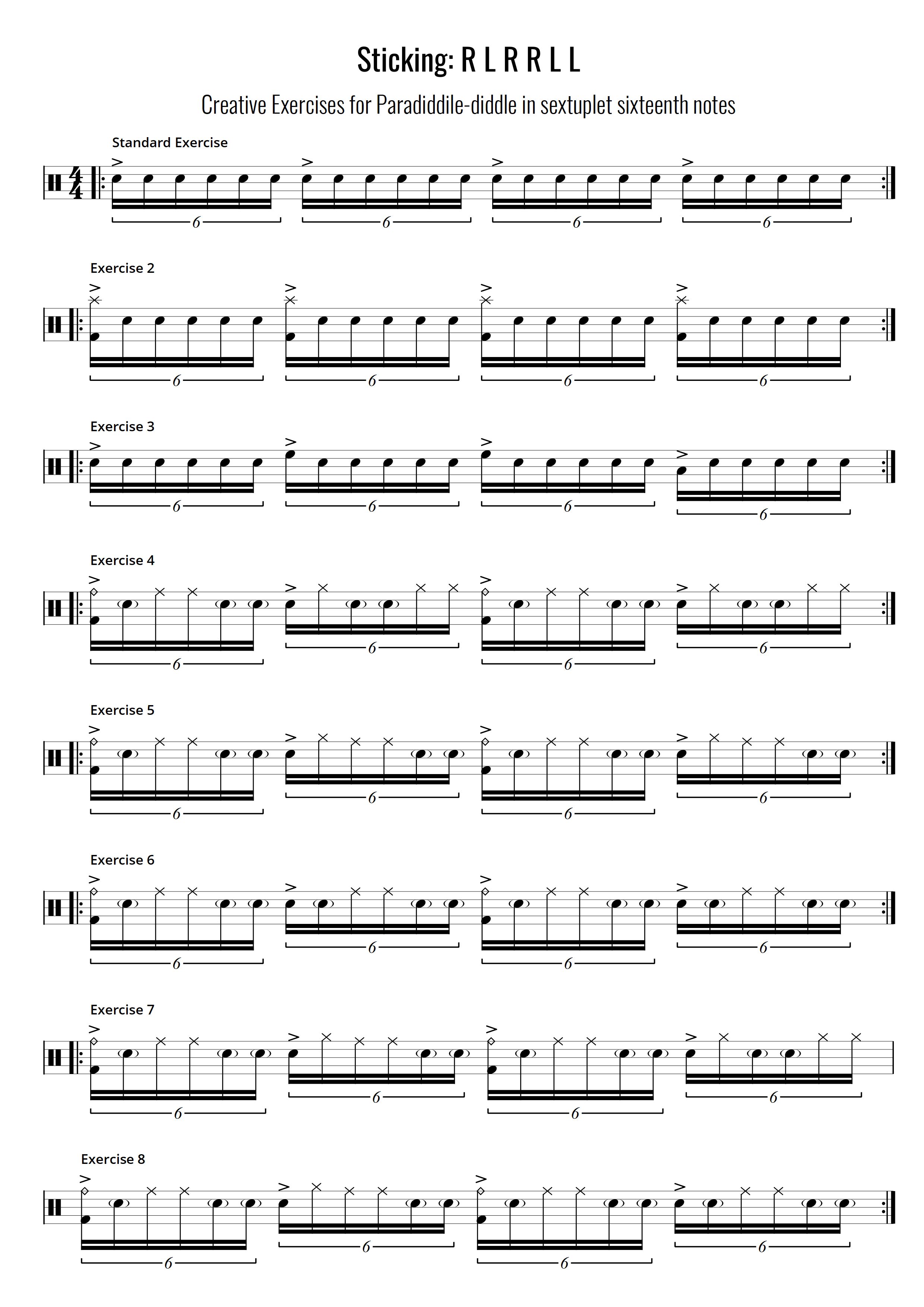
Creative Exercises for Paradiddile-diddle in sextuplet sixteenth notes

Here are some creative examples of how you can expand on the ‘Paradiddile-diddle in sextuplet sixteenth notes’ exercise 1 from Grade 7 technical exercises.

There are accents (>) underneath each line of rhythms to watch out for. There are also ghost notes (brackets around the notes), which means to play quiet taps. The diamond shape on the ride cymbal line is the Ride Bell. Play this with the shoulder of the stick to the left hand side of the bell (opposite for left handers).


Related: Drum Solo Exercises Using Six Stroke Roll With RLLRRL Sticking

Drum Solo Exercises Using Six Stroke Roll With RLLRRL Sticking

This is an exercise that can be used in your practice schedule, and can be used as drum fills in your playing. This 6 Stroke Roll rudiment (played on the snare drum) is part of the technical exercises in Rockschool Grade 7 (Alternative paradiddle-diddle in sextuplet sixteenth notes), and is a good excercise for becoming more comfortable with playing it. This six stroke roll exercise can also be used / modified for drum soloing.


Related: Creative Exercises for Paradiddile-diddle in sextuplet sixteenth notes