
Drumming Session for Keeping Fit

Guest Blog Post: Mia Johnson


People don’t normally think of instruments when they consider ways to get fit. They’re usually left to the realm of artistic expression. You create music with them and that’s basically it. However, one instrument has proven itself worthy of also being called a tool for fitness: drums. If you’ve ever looked at some of the best drummers in the world, you might have noticed that they are extremely lean. This is because drumming is a surprisingly good way to get in shape. It can be a very dynamic exercising tool with a bunch of fitness benefits. Here are some reasons why you might want to incorporate drumming into your fitness regime.

1. It’s a fast-paced instrument

If you had to pick one instrument to help you stay fit, drums would stand out as the obvious choice. They’re arguably the most fast-paced instruments that you can get your hands on. Drumming sessions involve constant hand movements that push players arm muscles to their limits.

Songs that are focused on drums usually sound extremely dynamic, which means that playing them will further motivate you to commit to the workout. When playing the drums, you can consider yourself an endless source of workout pump songs.

If you prefer slow songs that sound smooth, you won’t lose out on the exercise potential of drumming. You’d be surprised at how many movements are required to keep up even a slow hat pattern while other parts of the drum kit are working. Drums are very consistently dynamic when they’re used in songs.

Even if you’re not following the tempo of a specific song, but rather creating rhythm from scratch, you will still naturally aim for a higher tempo to test your skill and push your body to its limits.

2. Easy to get into

Many instruments have a very steep learning curve. For example, new musicians playing the violin will sound horrible until they get to a certain point where they might sound bearable. Even the simplest of instruments require quite a bit of practice before they can be used to create something that is appealing to listen to.

Drums are a bit easier to play in this regard. You get a lot of payoffs relatively quickly into the learning process. The learning curve isn’t as steep as some more melodic instruments. You can start with some very simple rhythms made up of two sounds and it will already be easy to listen to, although it might be horribly boring at first.

You don’t need to hire tutors to give you lessons in playing the drums. Using it as a way to exercise will help motivate you to learn more. After all, practice and repetition are what makes someone a good instrumentalist. You will unwittingly use your drum workout sessions as a way to get a lot better at playing them.
3. An endless source of fun

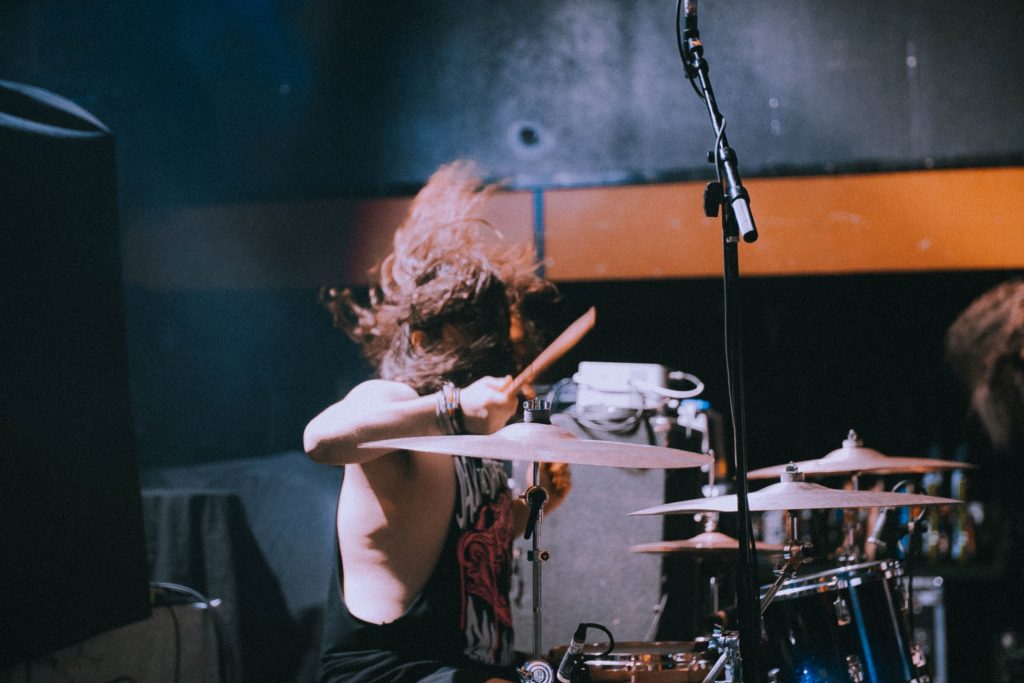
If you’re a fan of rock music, drums can give you the opportunity to bring some of that hardcore energy directly to your own room. Popular rock songs often have drum patterns that are just as recognizable as their guitar melodies. This means you can get the emotional rush of playing the song rather easily.

Drums are pretty unique instruments because their focus isn’t on creating a melody or chord progression, but rather keeping up a rhythm. It requires just as much skill as other instruments, but you might find that it gives you a lot more leeway and satisfaction than most other instruments. Drumming is all about improvising and going wild when you figure out a rhythm that suits your current state of mind. Once you get going, it can be hard to stop because it’s so ridiculously fun to play them.

4. It’s a cardio exercise

The constant and rhythmic movements of drumming help make it an ideal cardio exercise. You’re using a lot of your muscles for stability, which means much of your upper body is getting a hefty workout. The consistency at which drumming movements have to be done also affects your heart. It’s almost like having a run but using your upper body for the movements. In fact, there are various studies that compare the effects of drumming for cardio exercise versus running for long periods of time. It has been shown to be as effective as playing soccer for ninety straight minutes.

Drumming is a lot more adaptable than running or walking. People of all ages and skill levels can enjoy the perks of using it as a way to exercise. It doesn’t depend on the weight and it doesn’t give you any joint pain. Best of all, it’s going to help you keep your heart rate up no matter how good you are at playing them. Even if you make mistakes and have to have a do-over, it’s still going to be a very effective workout.

5. It’s an art

There are very few exercises that also qualify as an art form. Drumming allows you to create new music while also getting a wonderful workout. You don’t expect to get sweaty while playing the guitar or bass.

When you get better at playing the drums, you will find that your movements are much smoother and more precise. This is complemented by the same kind of improvement in terms of drumming as a workout. Your muscles get stronger and they allow you to make more precise movements with less energy being wasted. Your improvement as a musician will be followed by your fitness level and vice versa.

There’s a degree of emotional payoff when you play the music that you enjoy. At the same time, your body will get a rush of endorphins from the workout that drumming provides. Together, these two effects make playing the drums a very enjoyable physical and artistic experience

6. Drumming builds muscles

Most exercises fit into two different categories. You have aerobic exercises which consistently increase your heart rate and get blood pumping throughout your entire body. These include running, sprinting, and riding a bicycle. Basically, things that require constant movement. On the other hand, anaerobic exercises are sudden and powerful movements which tear a few muscle fibers and make way for muscle growth. Just about any weight-lifting exercise fits this criterion very well. Exercises like squats are considered anaerobic.

Surprisingly, drumming can fit both of these criteria rather well. Not only does it take your breath away, but it also paves the way for an increase in muscle mass for most of your upper body. You can expect to get chiseled hands the longer you play the drums. The harder you move the drum stick, the more stability your back needs to make that movement, which means that even your back muscles get bigger and stronger over time.

The muscle-building aspect of drumming shouldn’t be understated. It causes a lot of fibers to break and it leaves your body craving for protein and rest. After a long drumming session, you should always eat well and take a break. If you want to keep drumming for longer periods of time, you might want to keep your True Protein shakes near your drum kit. Without a constant intake of protein, you’ll very quickly get fatigued and you won’t be able to continue playing at the same level.

7. You can do it with friends

Working out with your friends is a great way to get your mind off of being tired. When you go out for a run, it’s a lot more fun to bring someone along with you. You can have a chat and make the workout session much more than just a bit of running. Hitting the gym with your buddy lets both of you enjoy the rest period after a tough workout.

Drumming is no different, you can easily work out while you’re spending time with your friends. It’s even encouraged that you get some like-minded individuals to play some instruments alongside you. You don’t even have to join a band to get the whole musical experience. People enjoy getting together to create spontaneous jamming sessions. There’s something about creating freestyle music that appeals to most musicians.

If you want to create something bigger than the sum of its parts, you could become part of a band. Rock music is traditionally made in a band environment, but it isn’t an absolute must. Some famous acts such as the White Stripes, have only two members that are multi-instrumentalists. Still, a band environment can help you meet new people and improve your talents as a musician and song creator.

Conclusion

Drumming has proven itself to be a ridiculously effective way to keep your body fit. It combines some of the best elements of various workout regimes while also being a really fun activity overall. You hardly even notice that it’s a workout. You can consider it an artistic expression that just happens to keep you fit the better you get. There’s no better way to combine art and fitness in one powerful and effective package.
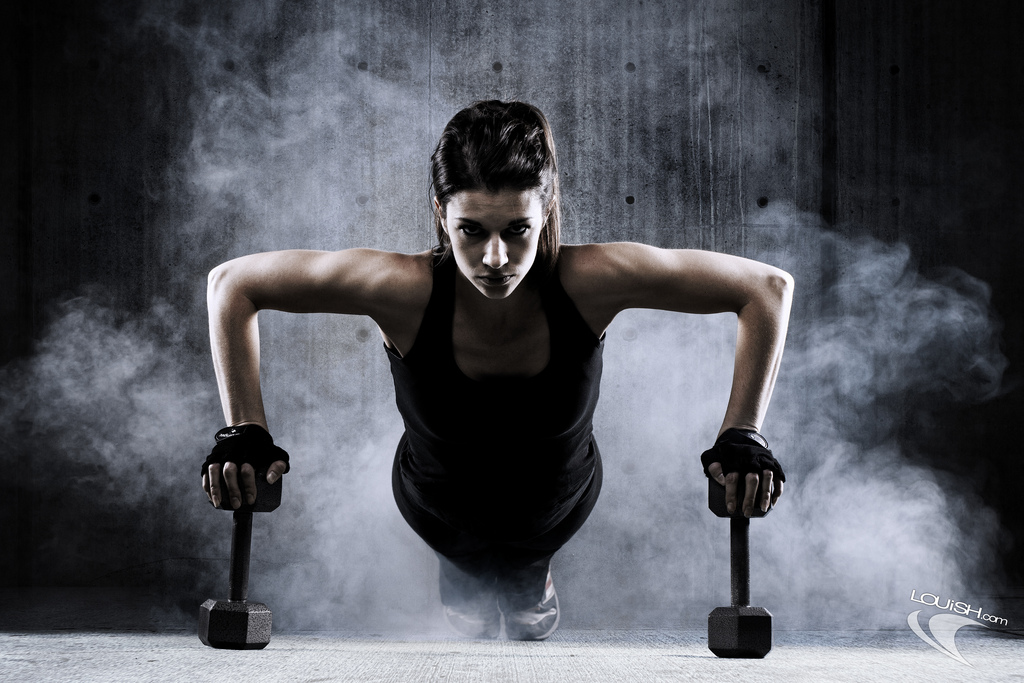
How Personal Trainer Sessions and Gym Workouts helped me to be a better drummer after ACL Knee Surgery

Photo Credit: Louish Pixel

I’ll start by saying I am very glad that I chose to have the ACL reconstruction operation after injuring my leg playing football and for anyone considering not having it done after injury I will say that it’s very much worth doing. There are risks as with any operation but they are fairly minimal and I certainly wouldn’t have wanted to go the rest of my life with an unstable knee. Whilst I’m not glad I injured it in the first place, I do see it as a blessing in disguise with how my life has changed following the operation.

When I injured myself playing football, the leg gave way when I pivoted to pass the ball with a lot of sideways momentum. I had ironically been pushing myself hard that week to get fitter so maybe some of my supporting muscles were a bit fatigued, which made it vulnerable.

After about 9 months of being misdiagnosed by physiotherapists and doctors, I contacted the doctor’s again and was referred to a senior physio who then referred me to get an MRI scan as a precaution but still thought it would be fine. At a similar time someone that had my injury before said exactly what it was following my description to them. After I later found out that this was correct it did surprise me that 3 physiotherapists and 2 had failed to pick up on even the possibility of it being the ACL (Anterior Cruciate Ligament). One said it could have been a dislocated knee cap or that I just jarred the muscles. I did tell them my leg went out to the side and back in again and then huge swelling and pain but unfortunately, no dice.

Up to the point of the MRI scan my knee had given way a few times under general moving about too quickly or attempting to jog. I kept on with the drums though because drumming with the legs is all straight line movements to the kick pedals, so it giving way was not really an issue.

The MRI scan was great. As a musician I wished I had declined the headphones used to distract me from the sounds because I wasn’t able to move at all to take them off during. The sounds were loud so I still heard them though. The sounds were a bombastic mix of what sounded like sine, square and saw waves from a primitive synth bellowing out at me.

When I met with the surgeon to discuss the results, I wasn’t prepared at all to hear that I needed a hamstring graft to reconstruct my ACL ligament through my knee, which would include harvesting my hamstring, braiding it together and drilling it into a bone in my lower leg with a dissolvable screw and then afterwards the rehab would be 6 months where I would also have to be careful not to damage the work done before it starts to morph into my body with blood flow etc and be strong enough to act like a normal ACL. There would also be risks during the op like blood clots and would be scars (they are barely visible now). Oh and repair my medial meniscus cartilage at the same time but that it may not be repairable and if so need some chopping out. I must have asked for about 3 glasses of water and also for the window to be opened because I felt nauseous.

I decided there and then to go for it after a short time of thinking about bailing and not doing it. At this point I was told to be very careful not to make it worse or the cartilage damage may worsen, so I decided to tell my band I can’t play for a while. I debated keeping going but I was so worried at this point of injuring it beyond repair. We had just released an album and preparing tour dates so it was pretty devastating for all, because it was a couple of months ‘til the operation and then at least several additional months before I would return. I did agree to go ahead with our video shoot though so that we had something else to promote at least online for a while.

The operation process was easy and I was in good hands with the excellent (albeit stretched) NHS and my surgeon was highly regarded from what people were saying.

I was in a lot of pain afterwards and I couldn’t really do much for myself for the first 2 weeks. It was so hard washing and moving around and I was heavily dosed up on painkillers. After week 3 I returned to teaching on crutches and I was kindly driven around by Mum, who took some time out to be there for me. After about 4 weeks I could drive (you have to be able to emergency stop) but walking was still hard and painful.

My physiotherapist assigned to me for the rehab is amazing and she really guided me through the recovery. I have to drive 30 mins each way to go weekly rather than the ones in my hometown but it has been worth it.

I was also offered to be part of a research study, which tests the benefits of building up the good leg along with the injured leg, which I signed up for. I’m not sure if I still would have gotten all the physio sessions if I didn’t, but I’m not sure on that.

The weekly physio sessions started me off into a regular routine of going once a week and then going to the gym for 2 or 3 more sessions in between. It sort of forced me into a healthy routine that I now stick to over 6 months after starting.

Before the operation I had got talking to someone at a wedding that I knew was a personal trainer so asked him what he thought about it all. He said I’d really done a number on it! More importantly he opened me up to thinking about the recovery. He said that the rehab after the operation was so important to get right because if you don’t put in the hard work it won’t recover and might not be as good in the long run.

Following that chat, I was inspired enough to go ahead with booking some PT sessions provisionally for when my leg was able to start taking on extra exercises to the physio’s homework I would get.

After the first 3 months of the 6 month rehab period it gets easier. The first 3 are hard graft and progress is notable but slow. The second 3 months you can really open up and start to do more but still have to be careful of twisting to aggressively and things like that.

Now for me it’s been 6 months and 3 weeks since the operation. I played my first return drumming gig 3 months ago and I’ve been having Personal Trainer sessions for 4 months. I play in a metal band so I use the double kick using both legs but my bad leg is not my lead leg – it’s the hi hat leg. So introduced my bad leg slowly to full double pedal stuff and it was not until 4 months after the operation I felt ready to give it the full beans.

During the time of being cautious with my bad leg I was having the PT sessions and physio too and all the while it was improving, and so was my ‘good leg’.

When I was a teenager I used to have issues with knee pain playing football and it’s only since this rehab process that I have realised that I needed to build up my upper leg muscles to protect my knee. The VMO muscles are key to this from what I have found out.

My PT sessions have really worked on my legs and core muscles and my physio was also focused on general strength including upper body and progressed onto agility work and running / cardio.

I feel that without this injury I never would have got into all this training. Now I can feel my body changing, getting stronger, and I have much more general endurance. Especially for metal drumming. It’s not so much the power but the endurance that is needed to maintain the speed playing, along with good technique.

My quads and calf muscles have been built up quite a bit and now when I drum at gigs I feel I can really rely on my muscle power and endurance to play the parts without fatiguing and feeling pain right at the top of the leg near the groin like I did before all of this.

This has given me confidence to push myself when writing new beats for songs. Before I had been tempted not to push myself too much as it would be hard to play in a long set but now I can really lean on my new found confidence and push the envelope like I did 15 years ago when I was a teenager, with all the energy in the world.

I feel like I’m getting my old abilities back but now I am so much tighter with my experience of recording and gigging, so right now I’m enjoying being better than I ever have been on the drums and feel confident to push it further.

Last week I played a gig and came off stage dripping with sweat and I knew I had never played so hard, with so much energy. I remember hard bits being quite easy and also really unleashing on some sections, throwing out energy to the audience and the band. I think that was my best ever performance, 22 years on from first starting to play the drums.

I will definitely keep up my gym work, and with the guidance of a personal trainer it helps with my motivation to keep it going and to keep everything fresh too. I’ve started to have joint PT sessions with a friend to make it more affordable and sustainable too.

There is so much you can do for free if money is tight, so I really recommend getting stuck into a range of workouts like cardio, weights, agility work using online resources. Don’t just do one – it’s important for men and women to do a mixture of cardio and strength work.

I hope to have inspired you in some way. Don’t wait to get an injury to find the motivation to work on your fitness like I did! Seeing the change in me and how far I’ve progressed from hobbling in severe pain to running in slaloms and doing things like barbell back loaded squats, box jumps and calf raises in months has inspired my partner and friends to get into a regular workout routine too.

I’ve still got some work to do on my knee, hamstring and calf muscles and I’ve only been doing the gym work for a relatively short time so I look forward to seeing what I can do over the next year and onwards.

So now it’s over to you. Unlock more creativity as a drummer by building up your strength and endurance to improve the confidence you have in your own abilities and potential.