How To Read The Notation – Inside the book: 40 Beats and Fills Exercises Book 2

PDF Ebook Buy Now →
Next Page: Warm Ups →

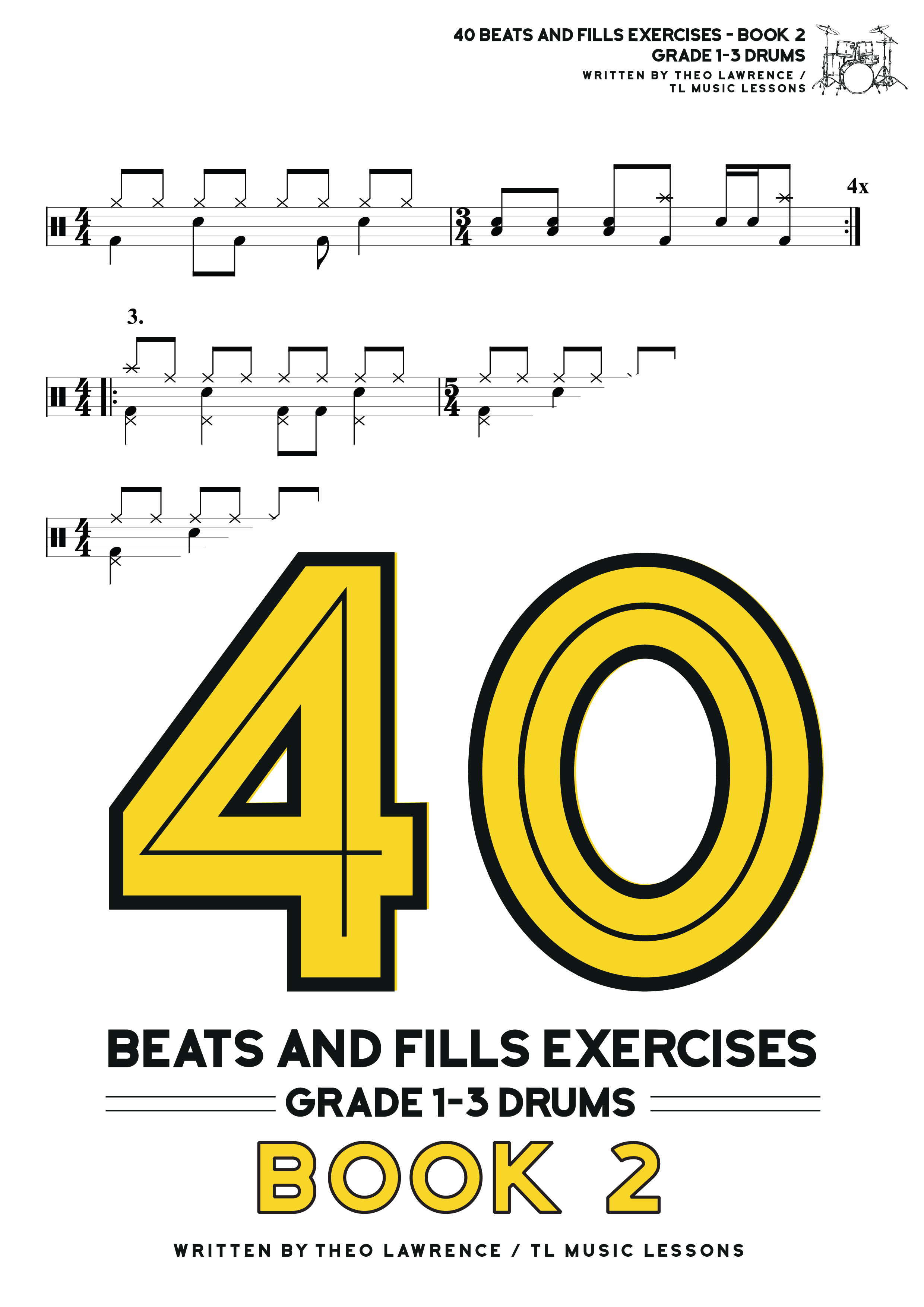
Here is part 1 of inside the book of “40 Beats and Fills Exercises Book 2“.

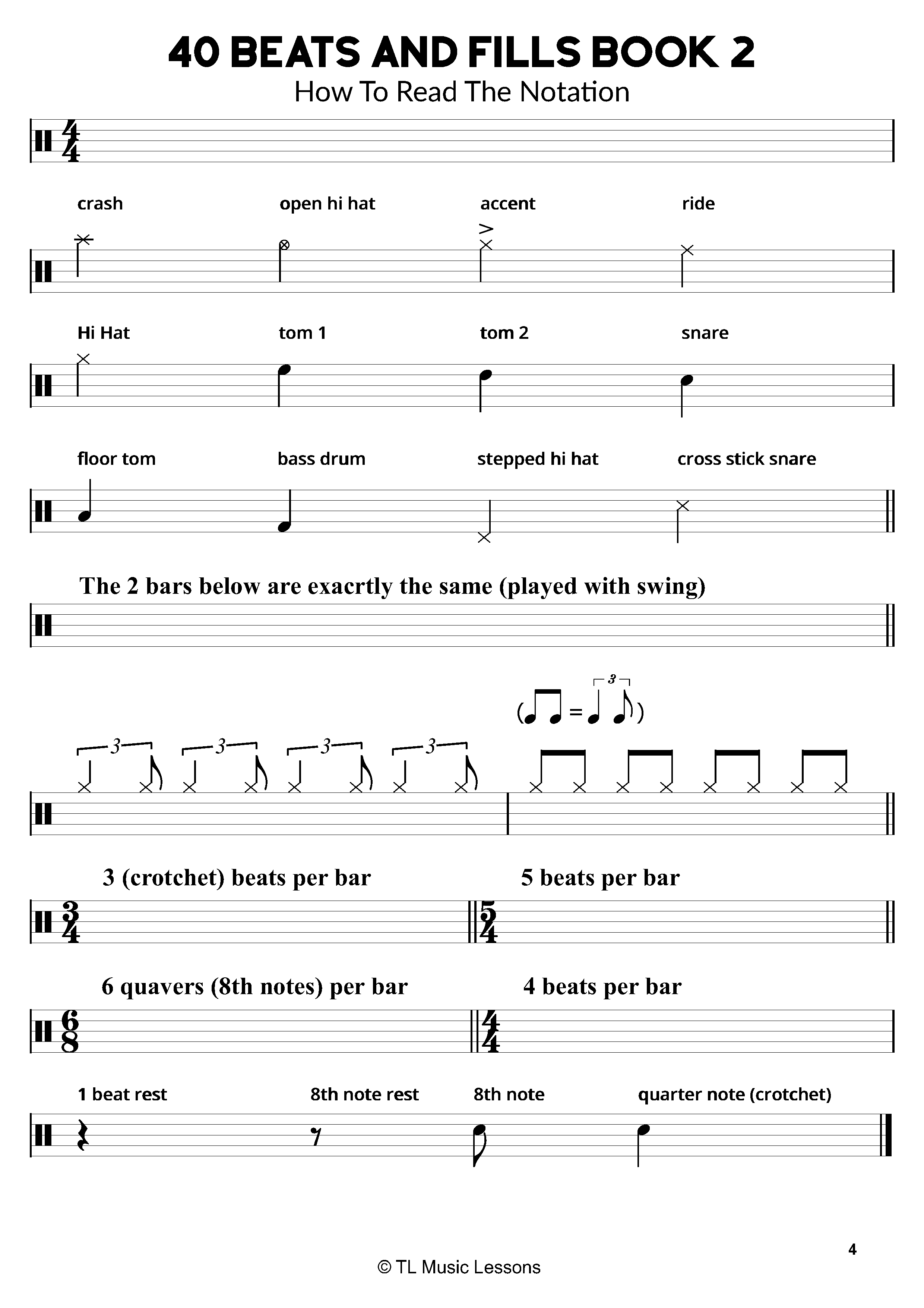
As you can see in the featured image, this post is showing you how to read the drum notation in the book. This is going to to be quite hard to understand without any prior knowledge or tuition, but I have made a video (see below) that shows you which drums are which and how to read and play the swing, rests, basic notes, and time signatures.

Here are all of the drum voices and notation markings on the sheet: crash cymbal, open hi hat, accent, ride cymbal, closed hi hat, tom 1 (small tom), tom 2 (medium tom), snare drum, floor tom, bass drum, stepped hi hat, cross stick snare drum, triplet swing, 3/4 bar, 5/4 bar, 6/8 bar, 4/4 bar, crotchet rest, quaver rest, quaver, crotchet.

There are more free pages like this one, use the the navigation below to view them.

Go forward to the Warm Up Sheet →
Buy the full PDF ebook →

40 Beats and Fills Exercises Book 2

PDF Ebook Buy Now →
Look Inside The Book →

This book contains drum beats and drum fills in the styles of pop, rock, blues, musical theatre, jazz, heavy metal, hard rock, punk rock, and indie, as well as covering fundamental techniques such as stepped hi hat, open hi hats, 16th note hi hats, 4 way coordination and  time signature changes. The book ranges from grade 1 to 3.

The last book focused on grades 1-2, so this book is focusing on the high end of grade 1 and up to grade 3 level. The book would be an ideal add on for anyone studying Grades 1-3, and in particular grads 2-3. To achieve grade 3 and possibly grade 4 level, the exercises would need to be played precisely, with correct dynamics, speed and fluidity.

Demonstration Video

There is a video accompaniment with timestamps for every exercise in this book here: https://youtu.be/jMT9UHOBHNM

About the book

This is the second book in the series, following directly on from “40 Beats and Fills Exercises (Grade 1-2)”. There are 40 exercises over 12 sheets, and a bonus sheet 13. There is also a warm up sheet, which can be played at the start of a lesson if you are studying some of the book.

Final Thoughts

I hope you enjoy working on this book or teaching with this book. Stick the metronome on and get into each exercise. Aim to repeat each exercise at least 2 times (ideally 4 or more). You could do 4, or keep repeating until you are happy with it. If you have done the sheet a few times before, perhaps 2 times each would be sufficient. Start without the metronome first if you are needing to slow down and learn each one. Slow it right down if it’s tricky and really make sure to play it properly. It’s better than trying to messily play it too fast.

Kind regards to you all,

Theo Lawrence / TL Music Lessons
Intermediate Drum Warm-Up – Part 2

Following on from the Grade 1-3 Drum Lesson Warm Up posted recently, and the intermediate drum warm-up Part 1 for drummers that have reached a higher level of ability (about Grade 4-6 +), here is the second part of the Intermediate drum warm up.

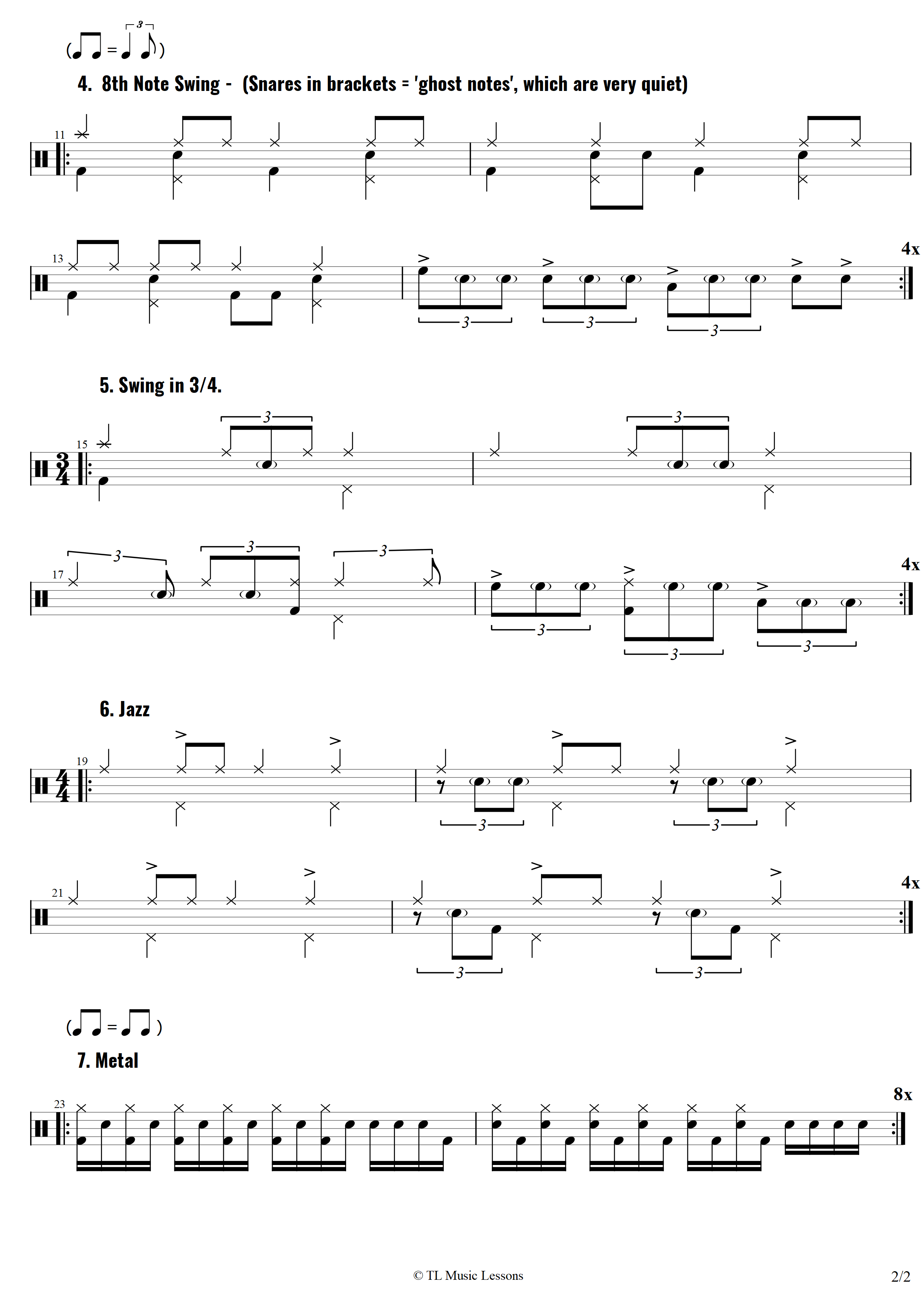
This second part of the warm up consists of stylistic exercise, including Swing in 4/4, Swing in 3/4, Jazz and metal. This is a continuation from part 1 where on exercise 3 there was a funk rock exercise.

Free PDF Sheet Music:

Intermediate Drum Warm-Up PDF


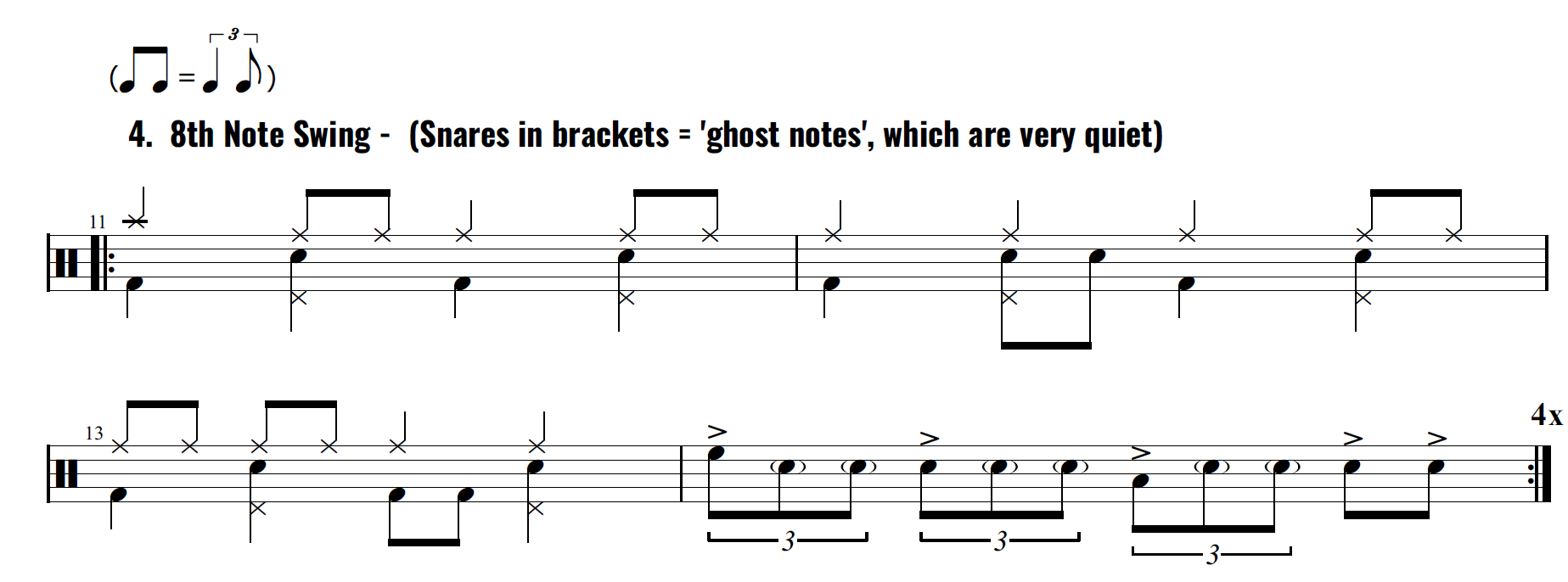
Exercise 4 – 8th Note Swing in 4/4.

The snare drums with brackets around are ghost notes, which means small quiet taps on the snare drum about 1-2 inches from the snare head. These beats and fills could be heard in musicals or swing bands for example.


Exercise 5 – 8th Note Swing in 3/4

These beats and fill again could be heard in musicals, swing bands, and also in Jazz.

Exercise 6 – Jazz

The ghost note snares and bass drums on the 4th bar are what you might play if you were comping. Here is a video that goes into great detail about comping:

Exercise 6 Jazz Warm up

Exercise 7 – Metal

This exercise is a good warm up for anyone and only needs a single bass drum pedal (kick pedal). It’s sort of an introduction to blast beats. You can learn more here in this video: