5 Sight Reading Example Tests for Rockschool Grade 3 Drums – Unofficial Practice Tests

These 5 practice tests are to help with practicing for grade 3 sight reading on drums. This is aimed at the 2006-12 syllabus, so when this is out of date, you should if the grade 3 sight reading is still snare drum based and in the same sort of format. Update: The 2012-18 syllabus has the same format.

For each test, play the metronome for 4 clicks so you know how fast you will be going. Prepare each exercise in 70bpm, 80bpm and also 90bpm, but you can randomly pick one of those for each exercise you do. Give yourself up to 90 seconds to practice, as it says in the exam book, and then try to play it with the metronome.

Example Test 1

Example Test 2

Example Test 3

Example Test 4

Example Test 5

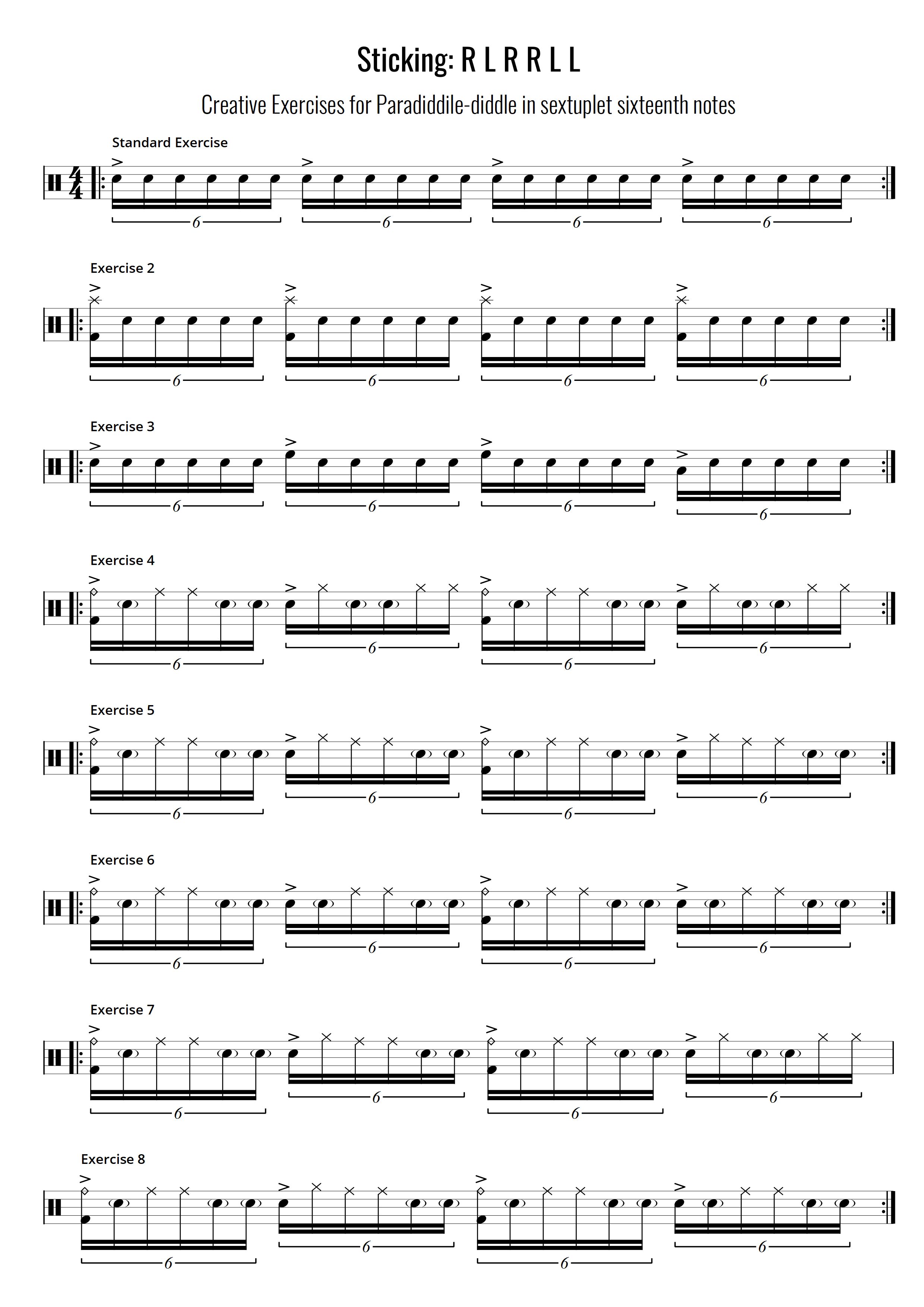
Creative Exercises for Paradiddile-diddle in sextuplet sixteenth notes

Here are some creative examples of how you can expand on the ‘Paradiddile-diddle in sextuplet sixteenth notes’ exercise 1 from Grade 7 technical exercises.

There are accents (>) underneath each line of rhythms to watch out for. There are also ghost notes (brackets around the notes), which means to play quiet taps. The diamond shape on the ride cymbal line is the Ride Bell. Play this with the shoulder of the stick to the left hand side of the bell (opposite for left handers).


Related: Drum Solo Exercises Using Six Stroke Roll With RLLRRL Sticking

Improvisation Test examples and ideas for Rockschool Grade 1 Drums exam

Students should improvise in the exam (don’t memorise this sheet). This sheet is for if you are stuck for ideas on how to improvise, then these should help you to learn the type of things to do. Imagine the sheet above with only the first bar of each line shown as written, and the other 3 bars of each line left blank. That is what it will look like in the exam, and you will have to make up the rest. The 4th bar must be a drum fill. It’s not too bad though, because it’s only 1 line, not a whole page like this. Drum teachers are welcome to print these excercises out and teach them to your pupils in drum lessons.

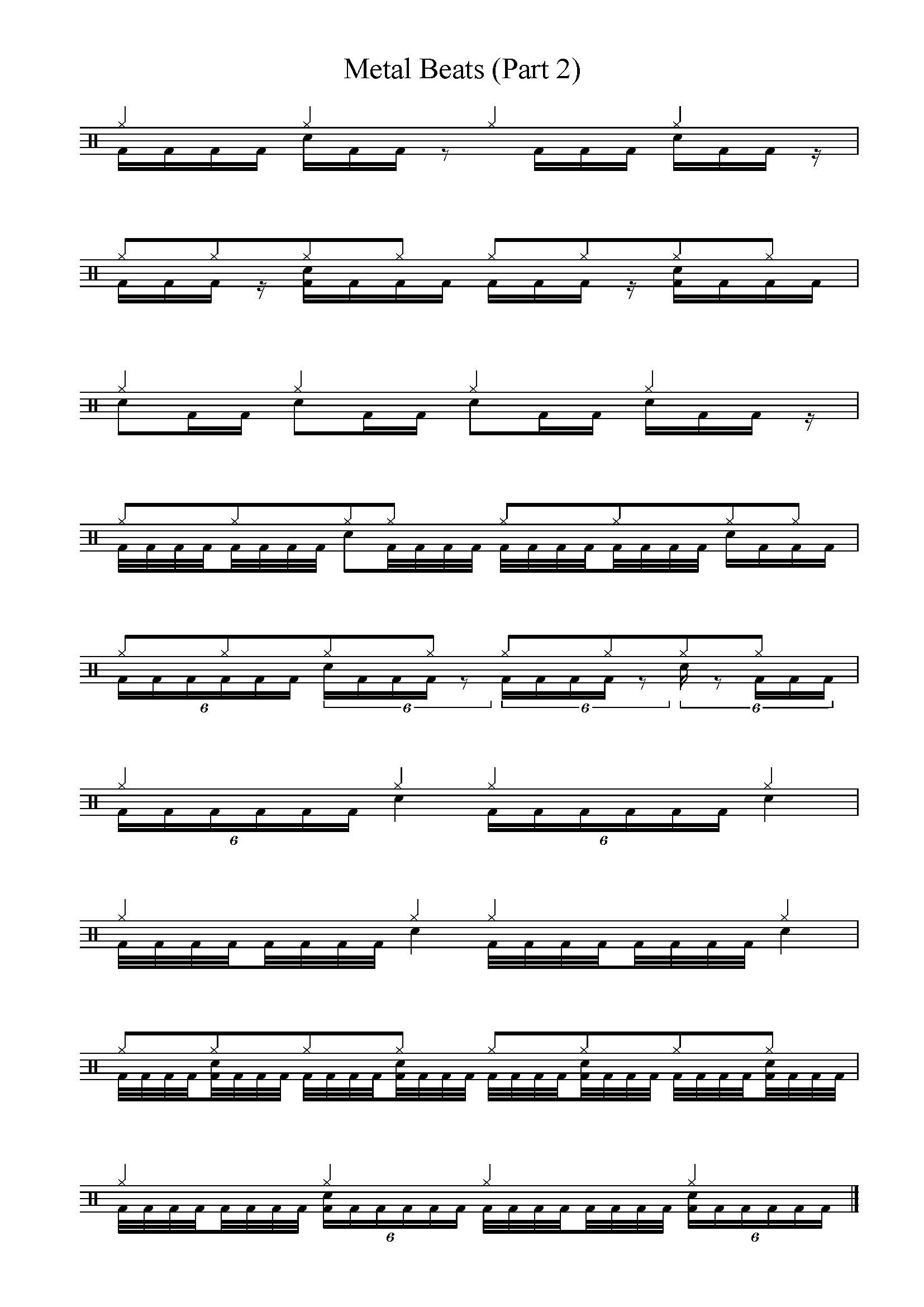
Metal Beats – Part 2

All these metal grooves are intended be played with a double bass drum pedal. You should already have done a lot of work with the double bass drum pedal before attempting these. If these look too difficult you could try 8 Intermediate Metal Double Bass Drum Beats.

There is a mixture of blast beats and simple double bass drum beats on this sheet. Play them all slowly to start with and then keep building up the speed. Ideally, use a metronome to record your progress, and practice this sheet over several weeks at least.


Related: Metal Beats – Part 1

Metal Drum Beats – Part 1

All these metal grooves are intended be played with a double bass drum pedal. You should already have done a lot of work with the double bass drum pedal before attempting these. If these look too difficult you could try 8 Intermediate Metal Double Bass Drum Beats

There is a mixture of blast beats and simple double bass drum beats on this sheet. Play them all slowly to start with and then keep building up the speed. Ideally, use a metronome to record your progress, and practice this sheet over several weeks at least.


Related: Metal Beats – Part 2

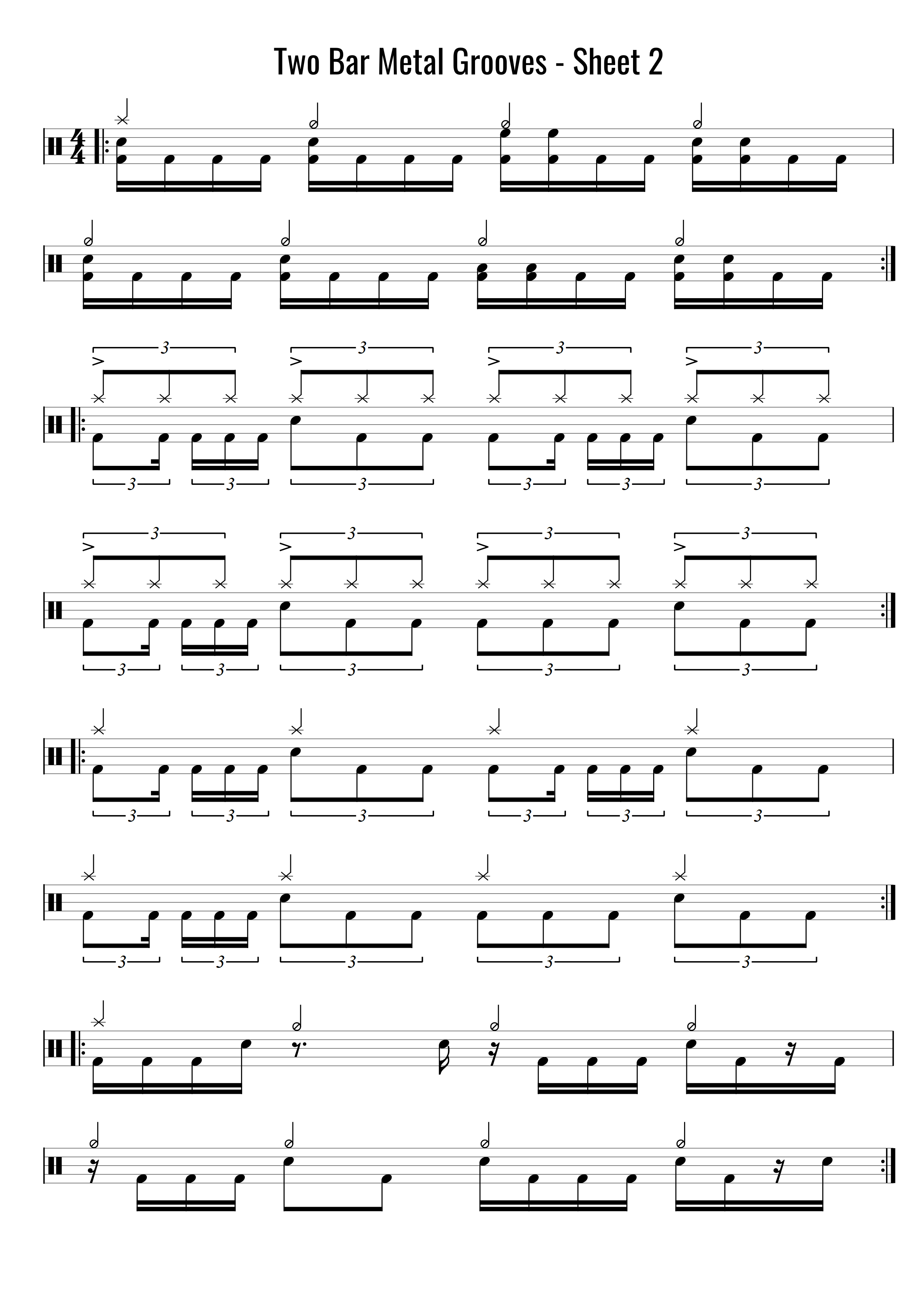
Two Bar Metal Grooves – Sheet 2

These are metal grooves that use the double pedal in an interesting way.

This sheet is ideal for a drummer that has been learning the double bass drum for a while, and has some reading knowledge. Hopefully this will give some people a few new ideas for creating their own double kick grooves.

Fast double kick drumming sounds great when executed with precision. Just remember, focus on accuracy and timing above speed, so start off practicing them slowly and correctly first.


Related: Two Bar Metal Grooves – Sheet 1 →

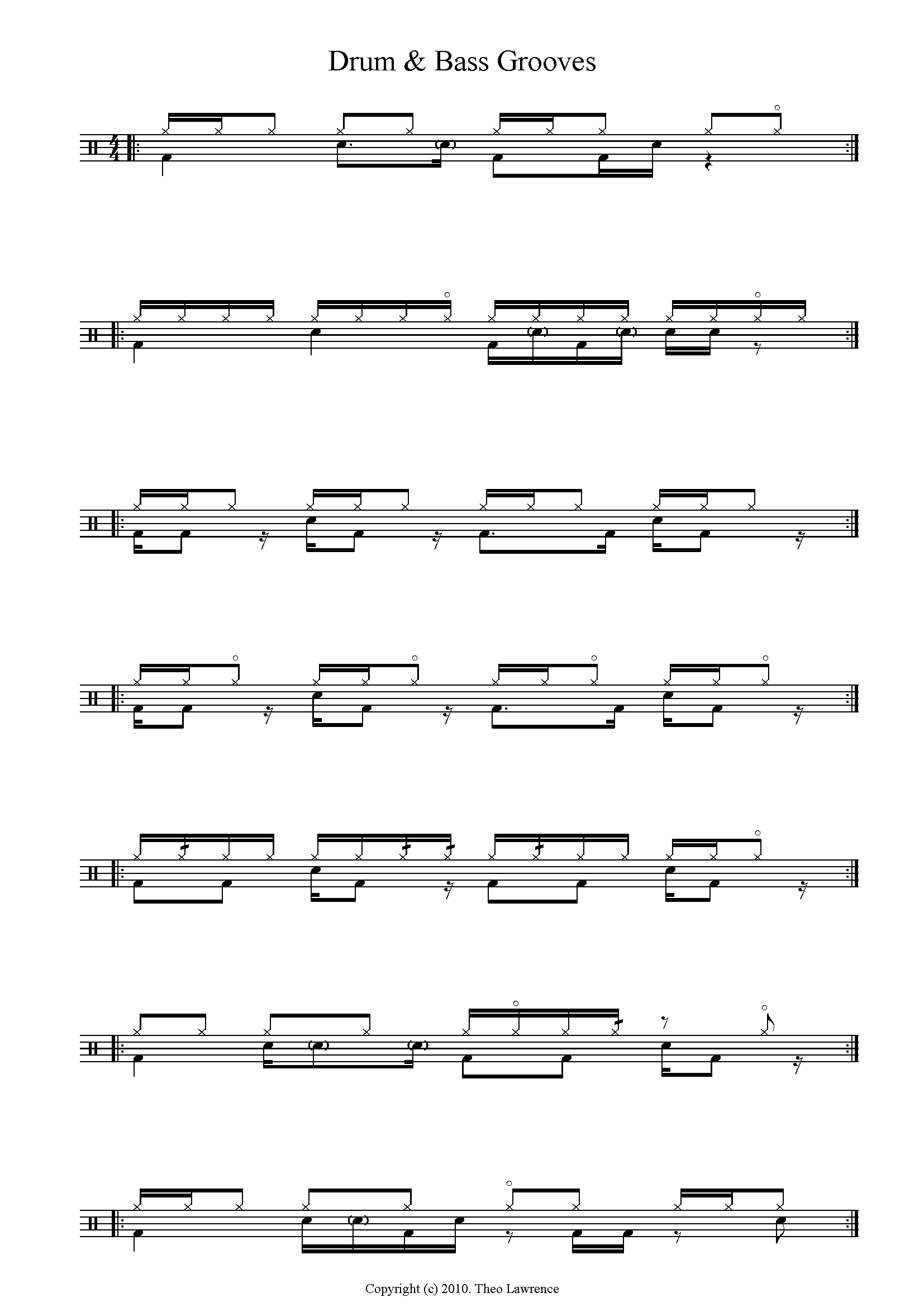
7 Drum & Bass Drum Beats

Repeat each line multiple times. You will need to be grade 5-6 level for this sheet. There is a lot of syncopation. Drum & Bass is generally fast paced, so start off slow and get the beats right first and then gradually up the speed until they are sounding fast.

The slashed Hi Hats on the 5th and 6th line mean to play double strokes on those Hi Hats. For example 1 slashed Hi Hat = 2 notes, played with a double stroke.

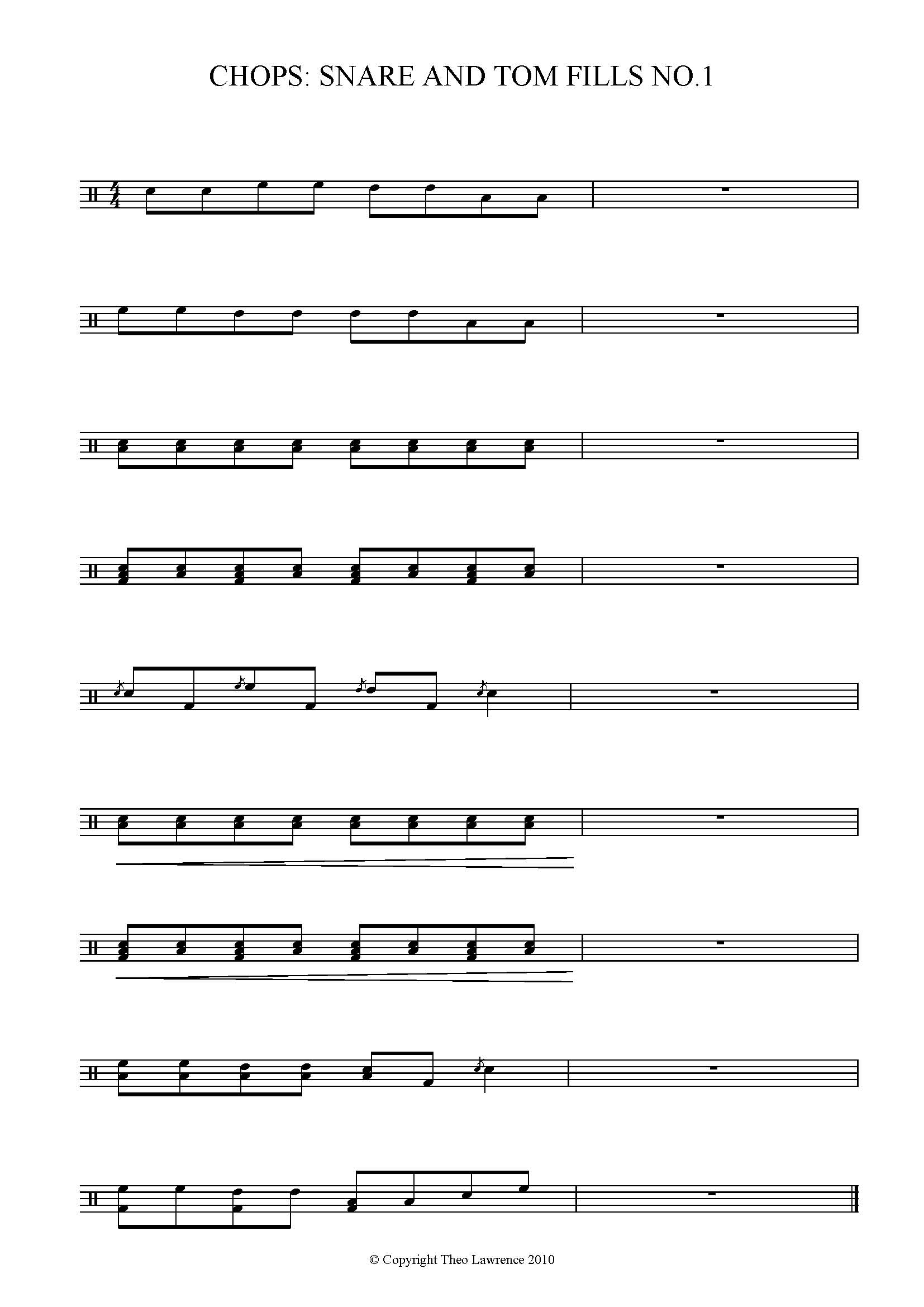
7 Short Drum Fills

These drum beats and drum fills exercises are for drummers that have learned how to play basic beats and fills already. A strong foundation in Snare Drum Sheet Music would be extremely useful here due to the style of the drum fills being based on snare drum rhythms.

After the first bar of drum beat, there are two ‘repeat the previous bar’ markings. Here the drummer may either copy the first bar, or develop the beat slightly. Each exercise should be repeated at least once before stopping and trying the next one.